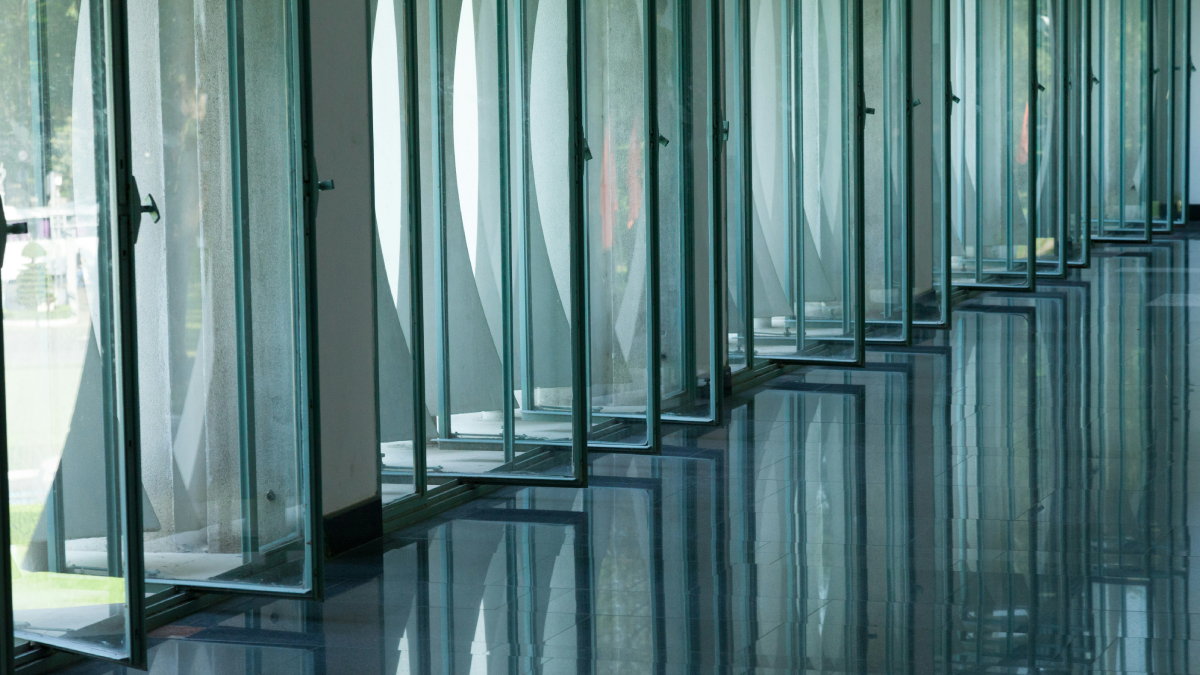
Low-Emissivity (Low-E) Glass
Rowan Heuvel on Unsplash
The technology the de facto standard for the American window industry
Low-emissivity glass — universally shortened to Low-E glass — is glass treated with an ultra-thin, virtually invisible coating designed to reduce the amount of infrared and ultraviolet energy that passes through it, without significantly reducing the amount of visible light it transmits.
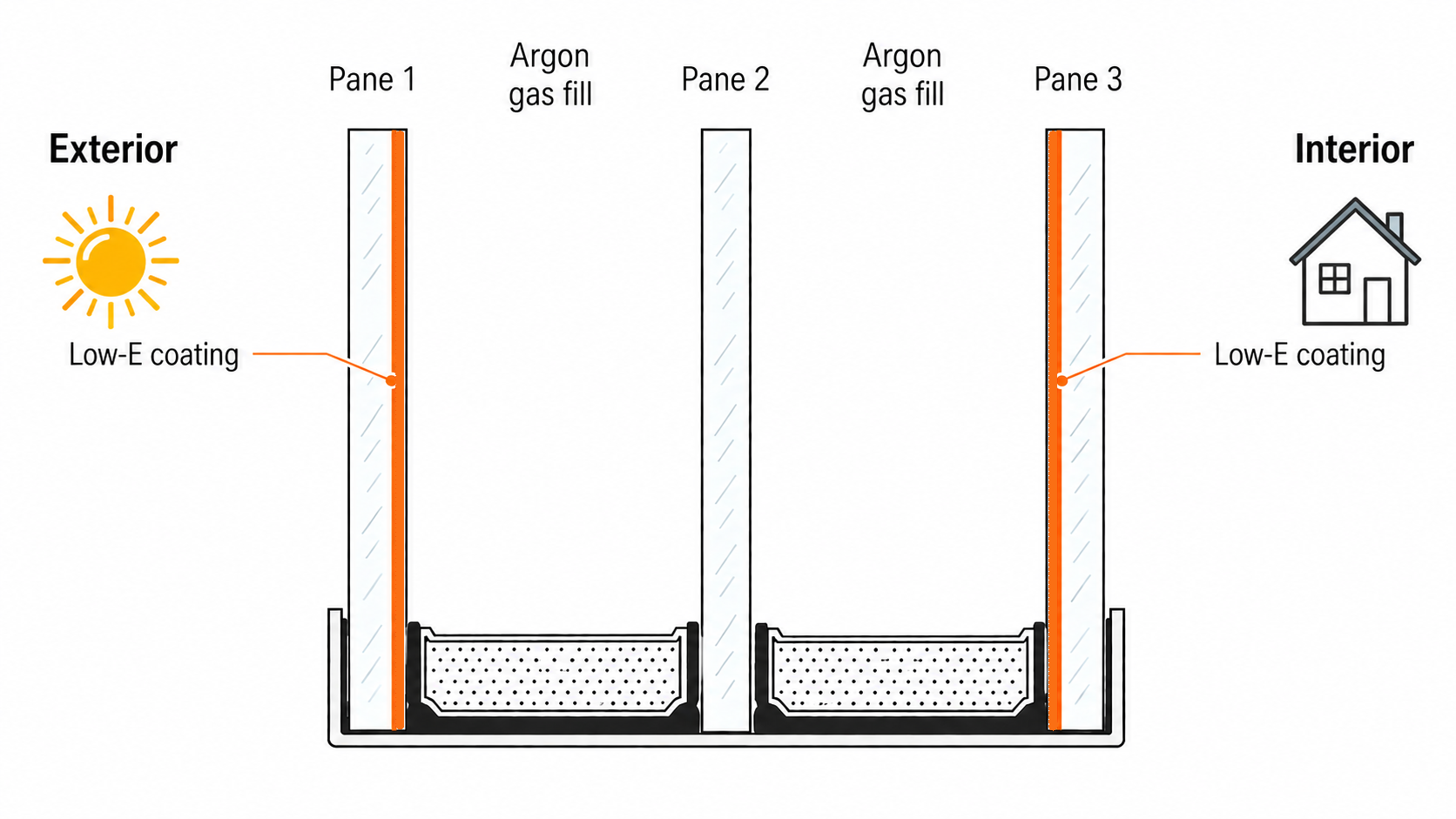
The "E" stands for emissivity: a measure of how much radiant heat a surface releases. According to Lawrence Berkeley National Laboratory (LBNL), a U.S. Department of Energy research lab that has led federally funded window-technology research since the 1970s energy crisis, a low-emissivity surface releases very little of the radiant heat that strikes it and instead reflects that energy back toward its source. In a window, the coated surface acts as a selective filter — it lets sunlight and daylight in, but reflects a large share of the infrared (heat) energy that would otherwise pass through the glass.
How It Works
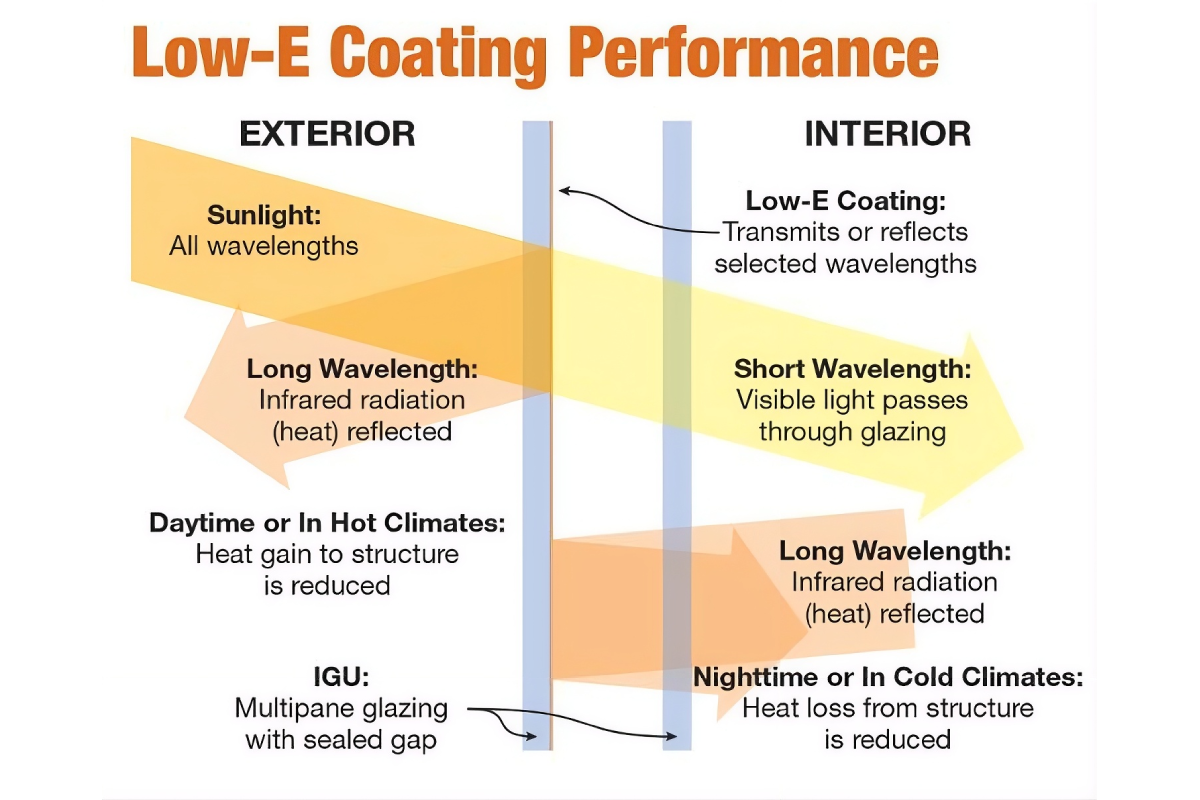
Manufacturers technical resources describe the coating as a microscopically thin layer of metal or metallic oxide, most commonly silver or tin oxide, applied to one of the interior surfaces of an insulated glass unit (IGU). When solar radiation strikes the window, the coating allows visible light to pass through largely unimpeded while reflecting a significant portion of the infrared spectrum, which carries heat, and blocking a large share of ultraviolet (UV) radiation.
This effect works in both directions, and coatings can be tuned by manufacturers accordingly:
- In winter, the coating reflects interior heat back into the room, reducing heat loss to the outdoors.
- In summer, the coating reflects exterior solar heat away from the glass, reducing heat gain indoors.
Manufacturing Types
Glass industry sources — including Viridian Glass, Vitro Architectural Glass, and building-science publication GreenBuildingAdvisor — describe two distinct manufacturing processes used to apply Low-E coatings, and the distinction matters to specifiers, fabricators, and buyers alike.
Hard coat (pyrolytic) Low-E. According to these manufacturer and industry sources, the coating — typically a tin oxide layer — is sprayed onto the glass while it is still hot on the float-glass production line, chemically fusing with the glass surface as it cools. This produces a durable, scratch-resistant finish that can be handled, cut, and even left exposed (as on a single pane) without special protection. The trade-offs, per these sources, are a slightly less refined optical clarity and comparatively higher emissivity — and therefore somewhat lower thermal performance — than soft coat. GreenBuildingAdvisor notes hard coat is the traditional choice for storm windows and other applications where the coated surface may be exposed to cleaning and handling.
Soft coat (sputtered) Low-E. The same sources describe soft coat as one or more ultra-thin layers of silver sandwiched between metal-oxide layers, applied in a vacuum chamber at room temperature through a process called magnetron sputtering. This allows manufacturers to precisely tune performance and achieve lower emissivity and U-factors than hard coat. The trade-off is fragility: the silver layer oxidizes if exposed to air or moisture, so soft coat must be positioned on a protected interior surface of a sealed IGU. Market-research firms Grand View Research and DataBridge Market Research both report that soft coat now dominates the market, citing figures of roughly 65–68 percent of Low-E glass volume in 2025 — these are commercial industry estimates rather than government data, and specific figures vary by research firm.
Performance Characteristics and How They're Measured
Low-E glass is evaluated and labeled using standardized ratings developed and administered by the National Fenestration Rating Council (NFRC), the independent nonprofit that certifies window energy performance for the U.S. market; ENERGY STAR (a joint U.S. EPA/DOE program) describes the resulting label as functioning like a "nutrition label" for windows. The three metrics NFRC certifies, per its published rating methodology, are:
- U-factor — the rate of heat transfer through the window. Lower numbers mean better insulation and less heat loss, which NFRC and ENERGY STAR both identify as most significant in cold climates.
- Solar Heat Gain Coefficient (SHGC) — how much solar heat passes through the glass, on a scale of 0 to 1. Lower numbers mean the window blocks more solar heat, most significant in hot, sun-intensive climates per ENERGY STAR's climate-zone guidance.
- Visible Transmittance (VT) — how much natural light passes through the glass. Higher numbers mean more daylight.
ENERGY STAR (U.S. EPA) divides the country into four climate zones — Northern, North-Central, South-Central, and Southern — each with its own U-factor and, where applicable, SHGC thresholds. According the current ENERGY STAR Version 7.0 criteria, requirements tightened considerably in the most recent update: the Southern zone's maximum U-factor dropped from 0.40 to 0.32 and its SHGC ceiling from 0.25 to 0.23; the North-Central zone's U-factor requirement fell from 0.30 to 0.25; and for the first time, the Northern zone carries a minimum SHGC requirement, allowing some passive solar heating credit in cold-climate homes. As a practical result of Version 7.0, Low-E coatings are now required across all climate zones to meet program criteria.
Benefits for Buyers
Lower energy bills. ENERGY STAR (U.S. EPA) states that certified windows can lower a household's energy bills by an average of up to 13 percent compared with non-certified products nationwide, based on RESFEN 6.0 modeling performed by D&R International on the program's behalf. Separately, ENERGY STAR's storm-window program estimates that Low-E storm windows installed over single-pane glass can save homeowners an average of about $350 per year in utility costs, and about $50 per year when replacing older, non-Low-E storm windows.
Improved comfort. Manufacturer sources describe Low-E glass as reducing cold drafts near windows in winter and hot spots from direct sun in summer, evening out room-to-room temperatures — a comfort claim consistent with, though distinct from, the metered energy savings above.
UV and fade protection. MI Windows and Doors and other manufacturer sources note that Low-E coatings block a large share of ultraviolet radiation, helping protect flooring, furniture, artwork, and window treatments from sun fading.
Durability with no added maintenance. MI Windows and Doors states that Low-E glass typically lasts up to 20 years — comparable to standard window glass — without special maintenance, since soft coat is sealed within the IGU and hard coat is bonded directly to the glass. Buyers should note this is a manufacturer-published estimate rather than an independent third-party durability study.
Code and resale relevance. Market-research firm Mordor Intelligence reports that updated building codes — including the 2024 International Energy Conservation Code and state-level updates such as California's 2025 energy code — are tightening baseline thermal requirements for glazing, reinforcing Low-E's shift from optional upgrade to baseline expectation in new construction and renovation.
Top Photo by Rowan Heuvel on Unsplash
Get our latest articles!
New and better



Subscribe to updates
Get the latest guides and industry news delivered to your inbox.