Florida Window Energy Code: U-Factor and SHGC Requirements
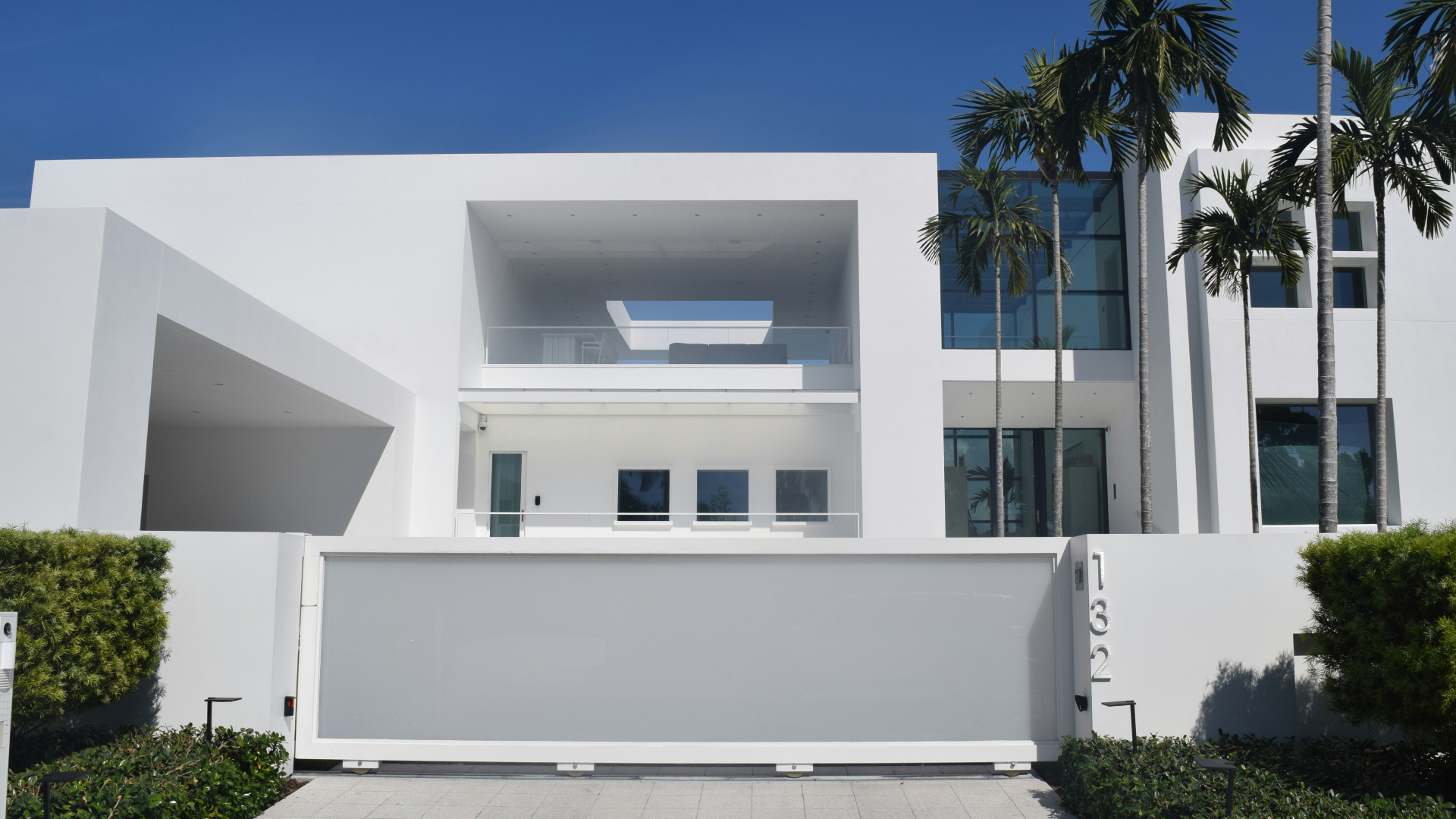
Tom Nora on Unsplash
Florida's energy code sets one window limit everywhere in the state and a second one only in the north. On the prescriptive path, every new or replacement window needs a solar heat gain coefficient (SHGC) of 0.25 or lower. In Climate Zone 2, which covers most of the state, the U-factor must also be 0.40 or lower. In Climate Zone 1, the seven southernmost counties, there is no U-factor requirement. Impact-rated windows in Zone 2 may go up to a U-factor of 0.65. These limits come from Table R402.1.2 of the Florida Building Code, Energy Conservation, 8th Edition (2023), in effect since December 31, 2023. The 9th Edition (2026) is scheduled to take effect on December 31, 2026, and keeps the same window U-factor and SHGC limits.
Updated: October 2026.
The limits by climate zone
The Florida code is the 2021 IECC with Florida's own amendments, and its residential table has only two climate zones. U-factor and SHGC values are maximums. "NR" means no requirement.
| Florida climate zone | Counties | Window U-factor | Window SHGC | Skylight U-factor |
|---|---|---|---|---|
| Zone 1 | Broward, Collier, Hendry, Lee, Miami-Dade, Monroe, Palm Beach | NR | 0.25 | 0.75 |
| Zone 2 | All counties not listed in Zone 1 | 0.40 (0.65 for impact-rated windows) | 0.25 | 0.65 |
Three details from the code change how these numbers work in practice:
- Small areas are exempt. Up to 15 square feet of glazed fenestration per dwelling unit can skip the U-factor and SHGC limits (Section R402.3.3).
- Averages are allowed for SHGC. An area-weighted average of products that are more than 50 percent glazed may be used to meet the SHGC limit.
- Skylights are handled separately. The window U-factor column excludes skylights. A skylight can be left out of the SHGC requirement if its own SHGC is 0.30 or lower.
Impact windows and the 0.65 exception
Footnote j of Table R402.1.2 reads: "For impact rated fenestration complying with Section R301.2.1.2 of the Florida Building Code, Residential or Section 1609.1.2 of the Florida Building Code, Building, the maximum U-factor shall be 0.65 in Climate Zone 2." In other words, an impact window in north or central Florida can meet the energy code with a much higher U-factor than a standard window. The SHGC limit of 0.25 still applies. In Zone 1 the question doesn't come up, because there is no U-factor limit at all.
The impact rating itself is governed by Section R301.2.1.2 of the Florida Building Code, Residential, the section the footnote cites, and not by the energy code. Meeting the energy table says nothing about wind-borne debris protection, so check that separately.
Replacement windows
The limits are not only for new homes. Section R503.1.1.1 says that when "some or all of an existing fenestration unit is replaced with a new fenestration product, including sash and glazing," the replacement must meet the U-factor and SHGC in Table R402.1.2. If you replace several windows, you can show compliance with an area-weighted average of all the replacement units. Section R501.7 lists "replacement fenestration" among the components that must meet the code's minimum efficiencies when a permit is required.
Air leakage and ratings
Windows, skylights and sliding glass doors must have an air infiltration rate of no more than 0.3 cfm per square foot, and swinging doors no more than 0.5 cfm per square foot (Section R402.4.3). The test is NFRC 400 or AAMA/WDMA/CSA 101/I.S.2/A440, run by an accredited independent laboratory, with the product listed and labeled by the manufacturer. Site-built windows are exempt.
U-factor has to be rated under NFRC 100 and SHGC under NFRC 200, again by an accredited independent laboratory, with the product labeled and certified by the manufacturer. A product without a labeled rating gets a default value from the code's tables (Section R303.1.3). In practice, the NFRC label is the document to check. NFRC describes SHGC as a measure of how much solar heat a product lets in: "Low numbers resist solar heat, high numbers allow solar heat."
What changes in the 9th Edition (2026)
The Florida Building Commission's analysis of changes for the 9th Edition lists these residential window-related edits:
- The window column is renamed "vertical fenestration U-factor." The limits themselves do not change.
- The maximum skylight U-factor drops to 0.60 in both zones, from 0.75 in Zone 1 and 0.65 in Zone 2.
- A new skylight SHGC column sets a maximum of 0.28 in both zones, down from the current 0.30 skylight allowance.
- Homes using the performance path (Section R405) instead of the table face a maximum area-weighted average window SHGC of 0.40, down from 0.50 today. The exception for overhangs of 4 feet or more stays.
- The prescriptive path gains a new Section R407 with additional efficiency credits, and one of the options is an "improved fenestration" credit with its own U-factor and SHGC table.
The Commission's schedule gives December 31, 2026 as the 9th Edition's effective date. Florida law says an updated code takes effect no sooner than six months after publication. If your permit application falls near the changeover, ask your building department which edition applies.
Beyond the code: ENERGY STAR
ENERGY STAR is a voluntary label with tighter limits than the Florida code. Under Version 7.0, effective October 23, 2023, windows in the Southern zone need a U-factor of 0.32 or lower and an SHGC of 0.23 or lower; in the South-Central zone, the limits are 0.28 and 0.23. Look up your zone with the ENERGY STAR climate zone finder. ENERGY STAR's advice for the South is to "look for lower SHGC levels (0.23 and less)." For how coatings change a window's SHGC, see low-E glass.
Buyers of a new home get one more document. The code requires an energy performance level (EPL) display card, certified by the builder, as an addendum to the sales contract. It lists the efficiencies of the components installed (Section R401.3).
Checking a window before you buy
- Find your county's zone in the table above.
- Ask the supplier for the NFRC-rated U-factor, SHGC and air leakage of the exact product and glass package, and confirm them in the NFRC Certified Products Directory.
- For an impact window in Zone 2, confirm the product approval as well, then apply the 0.65 U-factor limit.
- Compare options in the GlassBase window energy calculator: enter your ZIP code and wall direction and look at cooling and heating energy in kWh. The results are engineering estimates, not NFRC ratings. See how the simulator works.
To find window companies, browse Miami, Fort Lauderdale, Pompano Beach and West Palm Beach in Zone 1, or Tampa, Orlando, Jacksonville and Tallahassee in Zone 2. Terms are defined in the glossary.
Compare SHGC options for your Florida ZIP code
Sources
- International Code Council, Florida Building Code, Energy Conservation, 8th Edition (2023), Chapter 4 [RE] (Table R402.1.2 and footnotes b and j; Sections R401.3, R402.3.3, R402.4.3; effective December 31, 2023)
- International Code Council, FBC Energy Conservation, 8th Edition, Chapter 3 [RE] (Climate Zone 1 counties; Section R303.1.3)
- International Code Council, FBC Energy Conservation, 8th Edition, Chapter 5 [RE] (Sections R501.7 and R503.1.1.1)
- International Code Council, 2023 Florida Building Code, Energy Conservation, Eighth Edition (based on the 2021 IECC with Florida amendments)
- Florida Building Commission, Analysis of Changes for the 9th Edition (2026), FBC Energy Conservation, Residential
- Florida Building Commission, Facilitator's Summary Report, April 14, 2026 (9th Edition effective date 12/31/2026; Section 553.73(7)(e), F.S.)
- US EPA, ENERGY STAR, Residential Windows, Doors, and Skylights Version 7.0 and High Performing Windows or Storm Windows
- NFRC, What does the NFRC label tell you? and Certified Products Directory



Get our latest articles!
New and better



Subscribe to updates
Get the latest guides and industry news delivered to your inbox.