
How the GlassBase Window Performance Simulator Works
GlassBase.com
A guide to reading U-factor, SHGC, and VT — and understanding what shapes those numbers
GlassBase, a platform built for the window and door industry, offers a Window Energy Performance Calculator designed for preliminary product selection. The tool follows international ISO 10077 methodology, combining glazing, frame, and spacer data into a single whole-window number for each metric.
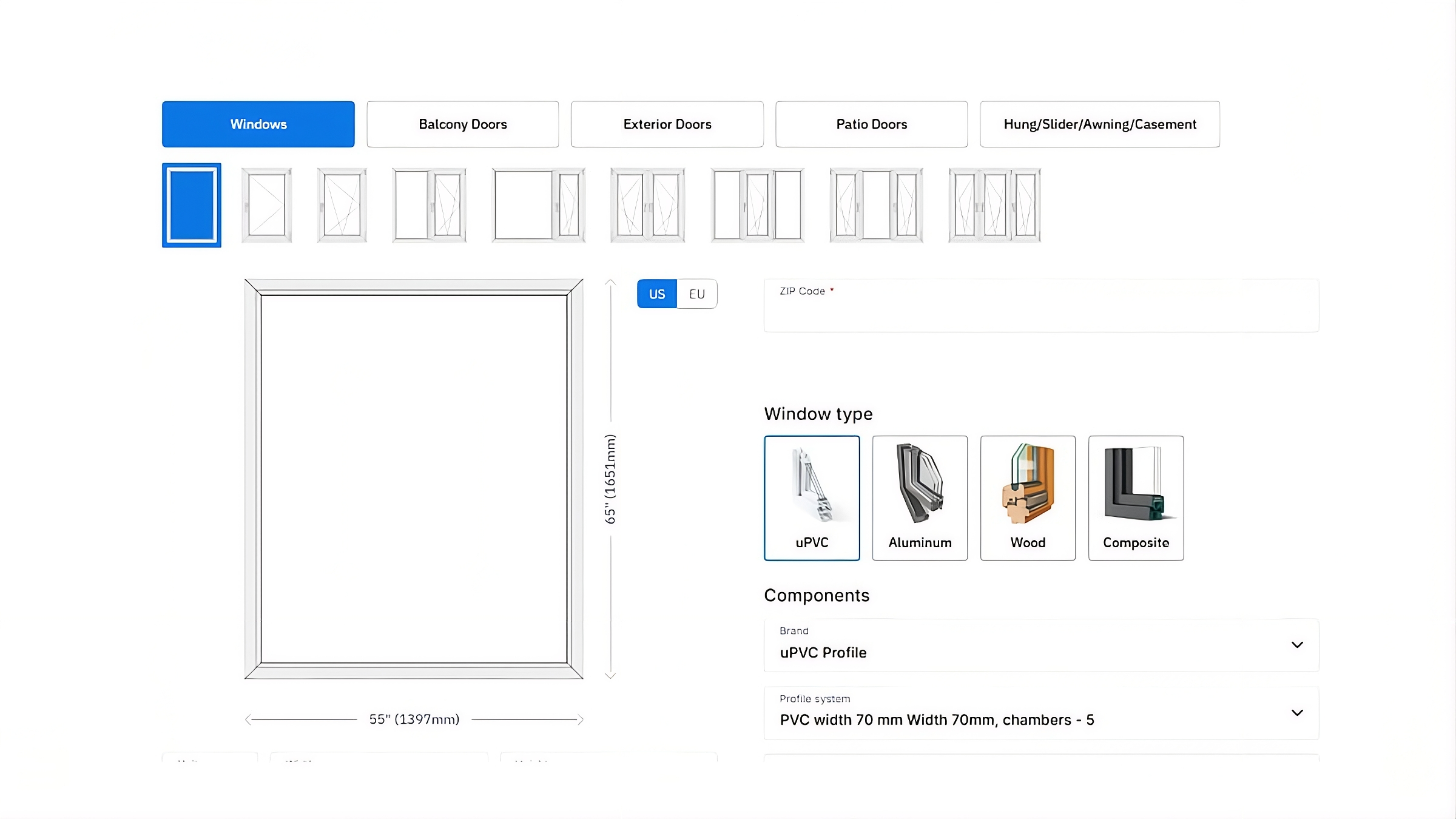
The calculator takes into account installation location, orientation, construction size, glazing type, shading, U-factor, SHGC, and air leakage. The ZIP code links your project to local climate conditions, since product requirements vary significantly by region. From there, the tool returns three core glazing ratings — U-factor, SHGC, and visible transmittance — and, as described below, extends that data into two additional analyses covering cost savings and comfort.
- Who the Calculator Is Built For
- What the Calculator Shows
- U-Factor: how quickly heat passes through a window assembly
- Solar Heat Gain Coefficient, SHGC: the fraction of solar heat that enters the building
- Visible Transmittance, VT: the share of natural light the window transmits
- Beyond the Ratings: Savings and Comfort
- Energy Savings Analysis
- Comfort Analysis
- A Note on Using Calculator Results
- How Climate, Orientation, Size, and Air Leakage Affect Performance
- How climate zone affects U-factor, SHGC & VT
- How wall orientation affects U-factor, SHGC & VT
- How window size affects U-factor, SHGC & VT
- Air leakage is related to U-factor, SHGC
Who the Calculator Is Built For
While the tool is public-facing, GlassBase designed it around four distinct users who each read the output differently:
- Window sales managers, who use the calculator during the quoting process to show customers how a proposed configuration compares to a standard or baseline unit, and to translate technical ratings into dollar figures a buyer can act on.
- Energy auditors, who use the whole-window U-factor, SHGC, and VT figures alongside air-leakage data to evaluate a building's envelope performance and identify where window upgrades would have the greatest impact.
- Architects, who use the orientation, size, and shading inputs to test how a glazing specification will perform on a specific façade before it is locked into a design.
- End consumers, who use the simplified savings and comfort outputs to weigh the upfront cost of a window upgrade against long-term energy bills and everyday livability — without needing to interpret raw U-factor and SHGC numbers on their own.
What the Calculator Shows
U-Factor: how quickly heat passes through a window assembly
Minimum (lowest) value → best insulator. A U-factor of 0.10 BTU/(h·ft²·°F) means almost no heat escapes through the window.
Maximum (highest) value → worst insulator.
Note: The Typical Values shown by GlassBase are intended as a reference so homeowners can compare their selected window configuration against standard industry performance levels.
Additionally, U-factor has typical values for each region according to the ENERGY STAR Climate Zone Map.
A lower U-factor means less heat escapes, a warmer interior glass surface in winter, and lower heating costs. The U.S. Department of Energy (DOE) recommends "the lowest U-factor you can afford" for northern regions. For southern regions, the DOE advises pairing the lowest available U-factor with the lowest appropriate SHGC.
In mixed climates, windows must perform across both heating and cooling seasons. That is why the North-Central zone permits a moderately low SHGC of up to 0.40. Spectrally selective low-e coatings are well suited here — they reduce solar heat gain while maintaining relatively high visible light transmittance.
Solar Heat Gain Coefficient, SHGC: the fraction of solar heat that enters the building
Values run from 0 to 1.
Low SHGC (near 0) → less solar heat enters. Desirable in hot, sunny climates to keep cooling costs down.
High SHGC (near 1) → more solar heat enters. Beneficial in cold climates where free winter solar gain reduces heating bills.
A lower SHGC offers stronger protection against overheating, while a higher SHGC allows more passive solar heat gain.
There is no universal rule that lower is always better. A lower SHGC is generally preferable in hot climates, on west-facing façades, and wherever reducing air-conditioning costs is a priority. A higher SHGC makes sense only in specific passive solar design applications in colder climates where solar exposure and shading can be carefully controlled.
Visible Transmittance, VT: the share of natural light the window transmits
Values run from 0 to 1, or from 0 to 100%.
Low VT (near 0) → darker interior, less glare. Reduces daylight and can make rooms feel dim.
High VT (near 1) → bright, clear view. Maximizes natural light and reduces reliance on artificial lighting.
The minimum value represents a very dark window with limited daylight transmission, while the maximum represents a highly transparent window with abundant natural light.
The DOE emphasizes that VT is not simply "the higher, the better." The right value depends on daylighting needs, glare control, and how much solar gain the room can tolerate in summer.
Beyond the Ratings: Savings and Comfort
The three glazing ratings answer the technical question of how a window performs. GlassBase complements that data with two additional sections—Savings and Comfort—that translate the underlying physics into what sales managers, energy auditors, and homeowners actually care about: cost savings and everyday comfort.
Energy Savings Analysis
This section compares projected energy use between a standard baseline window and the buyer's selected configuration, using inputs such as electricity rates, heating fuel type, and window cost.
The calculator determines the heating and cooling loads saved, then converts those values into energy consumption based on the specified heating and cooling system efficiencies.
Using the project's electricity rate and heating fuel cost, the tool provides a clear financial comparison, including:
- Annual energy savings (heating, cooling)
- Total savings over a 30-year service life
- Upfront investment premium
- Payback period
GlassBase also displays cumulative savings over the full 30-year analysis period, allowing sales managers and homeowners to see at a glance when the higher upfront cost of an upgraded window is offset by lower utility bills.
Comfort Analysis
While the Savings section measures energy performance in financial terms, the Comfort section evaluates the day-to-day living experience provided by a window, focusing on daylight quality and acoustic performance within the specific room where the window will be installed.
Users select a room type—bedroom, children's room/study, office, living room, or bathroom—since acceptable daylight and noise levels vary by use. The calculator then provides:
- Reduction in external noise
- Daylight Factor
- A composite comfort rating based on both metrics for the selected room type
A Note on Using Calculator Results
A window performance calculator can give you a useful general sense of what to expect and is especially helpful before making a purchase. However, any actual product should be backed by an NFRC label for energy performance and STC/OITC ratings for acoustic performance if noise reduction is a consideration.
As the ENERGY STAR website notes, you should first consider your climate zone, then the orientation of the building façade, and finally the exact NFRC rating for the specific product size being evaluated. The Savings and Comfort outputs are a useful planning layer on top of that — but like the U-factor, SHGC, and VT numbers themselves, they are estimates meant to guide a purchase decision, not a substitute for the certified rating on the product you ultimately buy.
How Climate, Orientation, Size, and Air Leakage Affect Performance
How climate zone affects U-factor, SHGC & VT
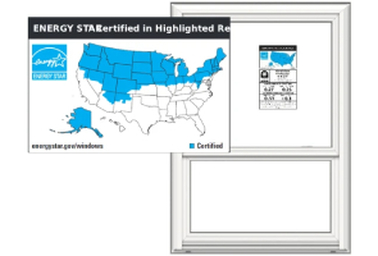
ENERGY STAR divides the U.S. into four climate zones. The colder the climate, the lower the U-factor you need. The hotter the climate, the lower the SHGC you need. VT carries no climate-specific requirement, but it determines how much of the solar energy reaching the glass actually arrives in your room as visible light.
As the Building America Solution Center (PNNL) notes, ENERGY STAR Version 7.0 — effective October 2023 — introduced the most stringent U-factor requirements to date, with the Northern zone set at ≤ 0.22. The EPA reports that installing ENERGY STAR-certified windows can reduce heating and cooling costs by an average of up to 13% nationwide compared to non-certified products.
How wall orientation affects U-factor, SHGC & VT
The orientation of the wall where a window is installed does not change the product’s rated U-factor, but it has a major impact on how beneficial or problematic a given SHGC becomes — and what VT level will feel comfortable. According to the DOE, in the United States south-facing windows are best positioned to capture winter solar heat, north-facing windows provide more even daylight with less summer heat gain, and east- and west-facing windows are more likely to contribute to overheating and glare.
North: Little or no direct sun. SHGC is less critical. Prioritize the lowest U-factor available to limit heat loss.
South: High winter sun angle in cold climates delivers free heat. In hot climates, use shading or a low SHGC to block summer heat. According to the DOE, south-facing windows are best positioned to capture winter solar heat in the U.S.
East: Morning sun exposure. A low SHGC — or exterior shading — helps prevent morning heat buildup.
West: Afternoon sun at the hottest part of the day. This façade carries the most demanding SHGC requirement. Lower VT also helps control glare.
The NFRC's Energy Window Calculator modeling for Minneapolis specifically notes that south-facing windows perform best in cold climates, and that orientation becomes less critical when high-performance windows with lower U-factors are installed. For Phoenix, the same modeling shows that west-facing walls consume the most energy and north-facing walls the least — though high-quality low-e glazing with a low SHGC substantially reduces that gap.
How window size affects U-factor, SHGC & VT
Window size influences performance in a less obvious way than climate or orientation. As the NFRC and DOE both note, window area determines total heat transfer, so a larger window means greater total heat loss in winter even at the same U-factor rating. And because SHGC and VT are ratios, larger area means more total solar heat and more total daylight entering the building.
U-factor and size: As noted by construction industry sources, larger windows carry proportionally more glass relative to frame. Whether the whole-unit U-factor improves or worsens depends on which component — glass or frame — is the better insulator in that specific product. With modern triple-pane low-e glass (U ≈ 0.15), a larger window can actually lower the whole-unit U-factor if the frame is the weaker link.
SHGC and size: SHGC is a ratio and does not change with window dimensions. However, total solar heat entering the room scales directly with area. A large south-facing window with SHGC 0.25 admits proportionally more BTUs than a small one with the same rating — something GlassBase accounts for when you enter your dimensions.
VT and size: VT is also a ratio and does not shift with size. But total daylight entering the room increases with area. A larger window with VT 0.40 delivers more lumen-hours than a smaller one — a useful consideration for north-facing rooms that rely on diffuse daylight.
Air leakage is related to U-factor, SHGC
Air leakage is not a component of U-factor, SHGC, or VT — but it is an independent pathway for heat loss and gain that directly affects real-world performance. The DOE identifies air infiltration through and around windows as a separate factor, while the NFRC notes that reducing air leakage produces fewer drafts, lower energy bills, and less outdoor noise.
A window with an excellent U-factor but poor airtightness — or a poor installation — will not deliver the comfort its label suggests. The DOE emphasizes that air leakage depends on both the product itself and the quality of installation.
It is also worth noting the sun protection field in GlassBase separately. The DOE explains that properly designed overhangs on south-facing windows can admit beneficial winter sun while blocking summer sun. NFRC and Energy Window Calculator analyses confirm that exterior shading is especially important in hot climates and on challenging east- or west-facing walls. The shading input is not cosmetic — it represents a genuine performance variable.
Other related articles

-378x274.jpg)
Get our latest articles!
New and better



Subscribe to updates
Get the latest guides and industry news delivered to your inbox.