
Understand Energy Star ratings for Windows
energystar.gov
Energy Star Ratings for Windows: What They Mean and How to Use Them
What "ENERGY STAR" on a Window Actually Means
ENERGY STAR is a pass/fail certification from the EPA. As the EPA confirms, a window earns it by meeting minimum U-Factor and, where applicable, Solar Heat Gain Coefficient (SHGC) thresholds for a specific climate zone. That's it. Two windows can both carry the label and perform very differently from each other.
The label tells you a window cleared the bar. It doesn't tell you how far above the bar it sits.
To compare two qualifying windows, you need the NFRC label — a separate sticker that lists four measurable performance numbers. All ENERGY STAR certified windows carry an NFRC label, but not all NFRC-labeled windows are ENERGY STAR.
Use ENERGY STAR to filter out weak options. Use NFRC numbers to pick the best one for your home.
What About "Most Efficient"?
ENERGY STAR also has a "Most Efficient" program for most of its residential products, including windows. The Most Efficient window criteria requires a U-factor of ≤ 0.20, exceeding the performance requirements in any of the four climate zones. These window products are all triple-glazed. It's worth the price premium if:
- + You plan to stay in the home long-term
- + You're dealing with comfort problems: cold glass, drafts, overheated rooms
- + Your heating or cooling bills are high
- + You're already paying for premium installation — pair it with premium performance
How to Read the Label in a Store
The NFRC label is usually a sticker on the glass pane or on the box spine. The ENERGY STAR logo is a separate sticker — check for both. An NFRC label alone doesn't confirm ENERGY STAR status.
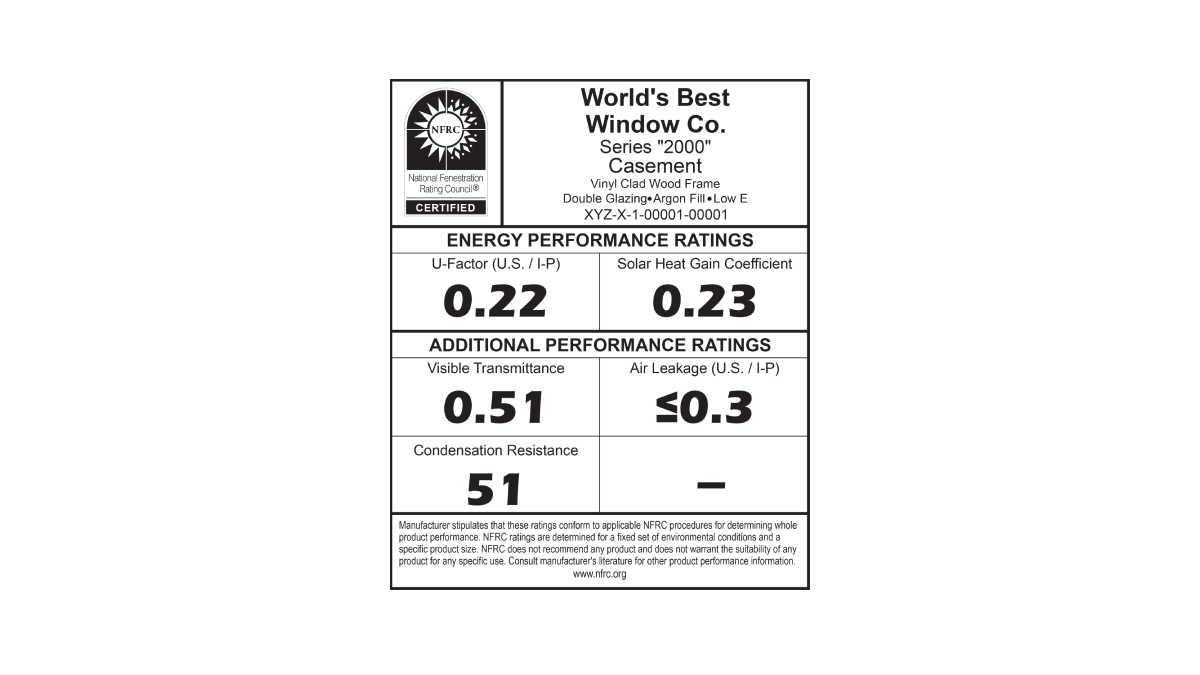
The Four Numbers on the NFRC Label
U-Factor (critical for every buyer) — The rate of heat transfer and how well the window insulates. Lower U-factor is better. This is the most important number for anyone in a cold or mixed climate. A lower U-factor means warmer glass on the interior surface, which reduces cold drafts near the window.
Scale: 0.10 – 1.20
Solar Heat Gain Coefficient, SHGC (critical #2) — The fraction of solar energy transmitted through the glass. SHGC is measured on a scale of 0 to 1. This number is context-dependent: in hot climates, you want it low (block the sun). In cold climates, a higher SHGC lets in free solar warmth in winter. Most buyers misread this one.
Scale: 0 – 1
Visible Transmittance, VT (good to know) — How much solar light can enter a home through a window, rated on a 0 to 1 scale. Low-E coatings that reduce SHGC can also reduce VT. Not part of ENERGY STAR requirements, but relevant if natural light matters to you.
Air Leakage, AL (optional) — Drafts through the frame. The AL rating must be 0.30 or below to qualify for ENERGY STAR certification. As the NFRC notes, it's not always printed on the sticker — ask the sales rep if you don't see it. Many buyers regret ignoring this number more than any other.
Why Climate Zone Changes What "Best" Looks Like
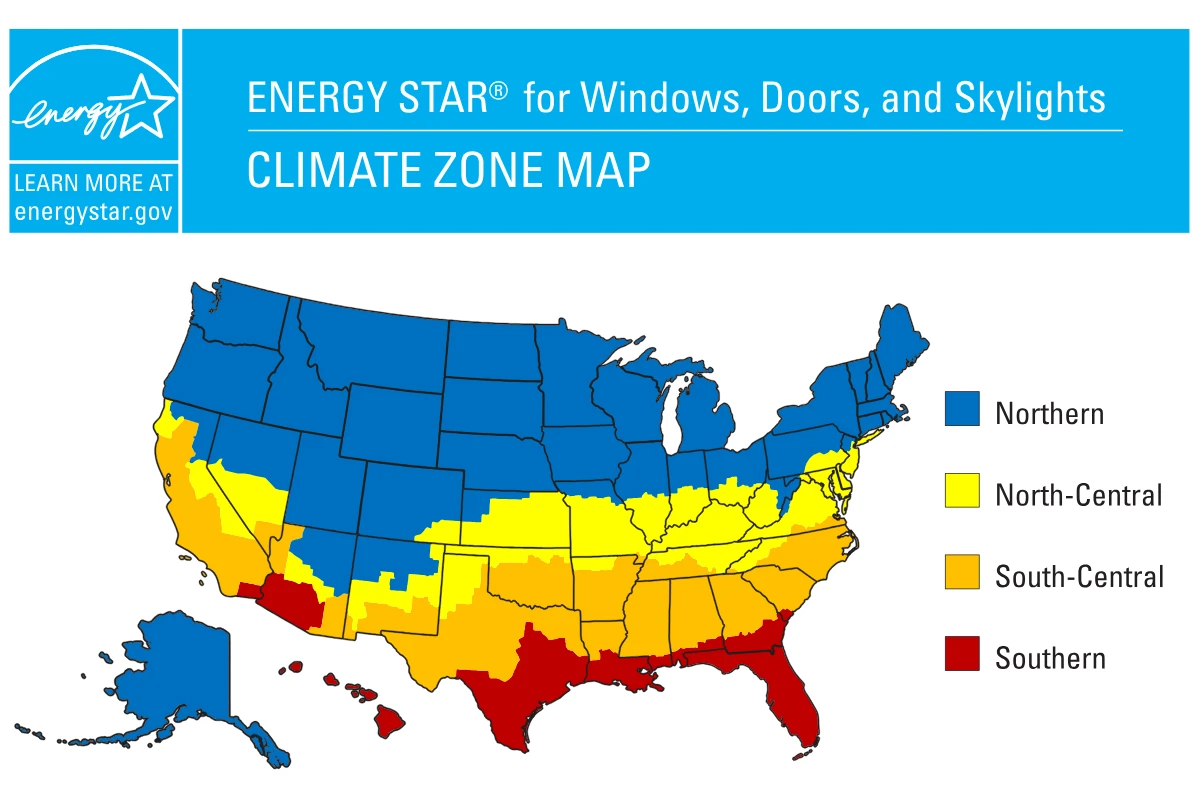
ENERGY STAR requirements vary by region because windows, doors, and skylights must meet U-Factor and, where applicable, SHGC requirements based on climate zone. A window optimized for Phoenix would be a poor choice in Minneapolis — and vice versa.
As ENERGY STAR notes, there are four climate zones: Northern, North-Central, South-Central, and Southern.
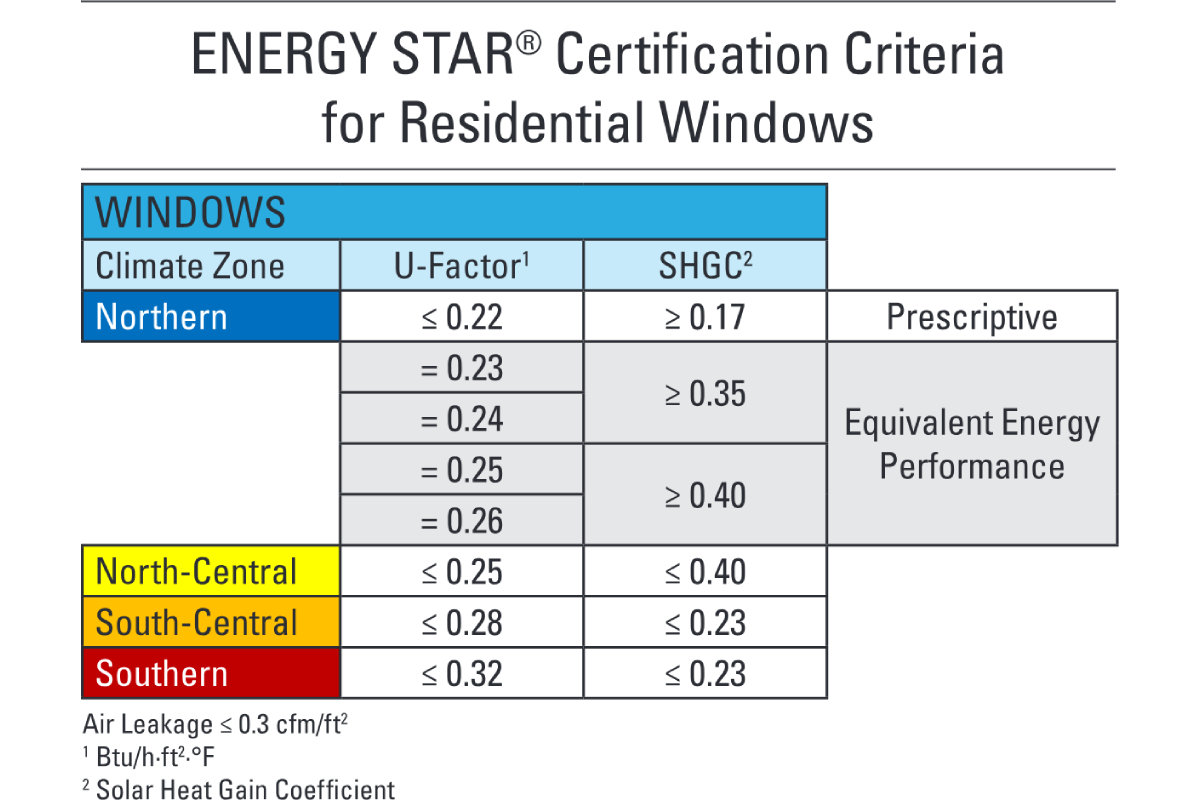
In practice:
- • Cold climates: Prioritize U-factor. A low U-factor keeps heat inside and the glass surface warmer.
- • Hot/sunny climates: Prioritize SHGC. Blocking solar heat reduces cooling loads.
- • Mixed climates: Balance both, and factor in which direction your windows face. In colder climates, the ideal window for a south-facing wall has a higher SHGC and a low U-factor. Windows that face east and west should have a low SHGC or be shaded — especially west-facing windows, which take direct sun at the warmest part of the day.
Don't buy by brand slogan. Buy by your climate zone and how the sun hits your house.
A Note on States That Span Multiple Zones
California, Texas, and Florida each cover more than one climate zone. Don't assume you know your zone from your state name alone. ENERGY STAR establishes U-Factor and SHGC criteria for windows based on a climate zone map with four zones, and the criteria vary with higher SHGCs in colder climates and lower SHGCs in hotter climates. Use the ENERGY STAR county lookup tool at energystar.gov to find your exact zone.
Common Buying Mistakes
The most common and costly errors buyers make.
Buying by zone name, not zone lookup. Look up your zone by county at energystar.gov. A state-level guess can put you in the wrong zone.
Treating ENERGY STAR as a performance ranking. The label is a minimum floor, not a grade. Two windows with identical ENERGY STAR badges can have very different U-factors and SHGC values. Read the NFRC label to compare them.
Chasing the lowest SHGC in a cold climate. In the Northern zone, a very low SHGC blocks free solar heat in winter — and your furnace picks up the slack. Northern buyers should target a moderate-to-higher SHGC to capture available solar gain. (Note: ENERGY STAR's Version 7.0 specification sets a maximum U-factor for the Northern zone but does not establish a minimum SHGC floor. The guidance to keep SHGC at or above approximately 0.17 reflects a widely cited practical guideline, not a regulatory requirement. Consult a local energy auditor for orientation-specific advice.)
Ignoring window orientation. West-facing windows take direct afternoon sun regardless of climate zone. South-facing windows are the best source of passive solar heat in winter. The ideal SHGC can vary by where on your house the window sits.
Skipping air leakage. AL isn't always on the sticker, but a drafty frame undermines even a great U-factor. Ask your retailer for the AL rating. Anything above 0.30 fails ENERGY STAR certification.
Buying a great window with a poor installation. Condensation, drafts, and water intrusion after installation are almost always an install problem, not a product problem. Ask about air sealing, flashing, and documented installation steps. A premium window with a careless install performs like a budget window.
Quick Rules of Thumb
Match your main problem to the right specification.
My house is cold in winter
Prioritize U-factor. The Most Efficient window criteria — a useful high-performance benchmark — requires a U-factor of ≤ 0.20, and all such products are triple-glazed. For standard certified windows in the Northern zone, aim for U-factor ≤ 0.22 per ENERGY STAR Version 7.0. Keep SHGC moderate to capture solar heat during winter — a very low SHGC works against you in cold climates.
My house is hot in summer / AC bills are high
Prioritize SHGC ≤ 0.25. Look for Low-E coatings rated for solar rejection. U-factor is less critical when cooling dominates your energy bill.
I have cold winters and hot summers
Balance both: aim for a U-factor ≤ 0.30 and a moderate SHGC. A double-pane Low-E window with argon fill covers most North-Central homes well.
I have condensation or fogging on the glass
A lower U-factor warms the interior glass surface, which reduces condensation. Condensation Resistance is scored on a scale from 0 to 100 — the higher the score, the less moisture build-up the window allows. Look for a CR rating of 50 or higher on the NFRC label.
I want to reduce outside noise
ENERGY STAR ratings don't measure sound. Ask for an STC (Sound Transmission Class) rating. Laminated glass can achieve an excellent STC rating, though a good STC rating in the low-30s can also be achieved with triple-glazing utilizing an interior panel of standard glass — because variation in air space is also key in noise reduction. The glass type matters more than pane count alone for sound performance.
Every window decision depends on orientation, shading, and your specific heating vs. cooling costs. These rules of thumb are a starting point — not a substitute for a local energy audit.
Top Illustration: energystar.gov.
Get our latest articles!
New and better



Subscribe to updates
Get the latest guides and industry news delivered to your inbox.