What Actually Makes a Window "Burglary-Resistant"? A Look at U.S. Standards and Industry Expectations
Winkhaus
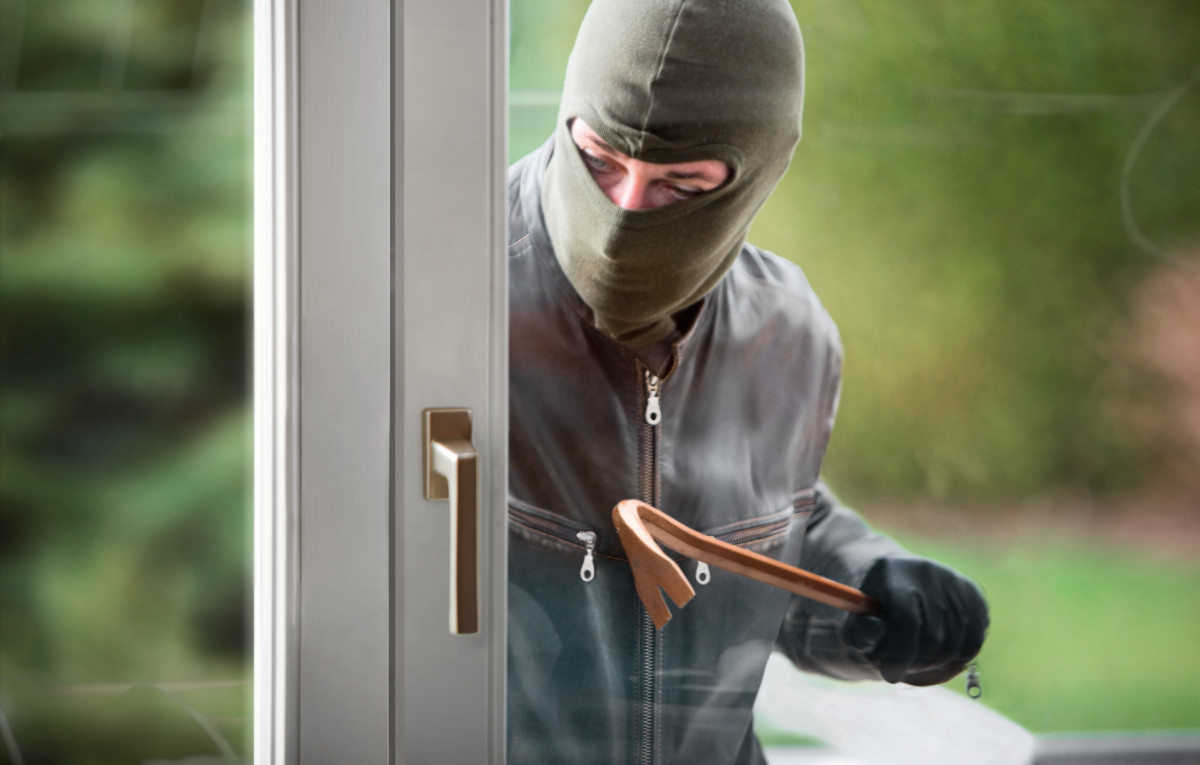
Manufacturers market windows as "burglar-resistant" constantly, yet no federal law defines the term. Unlike fire ratings or hurricane codes, burglary resistance in the U.S. rests on voluntary test standards, insurance practices, and police advisories.
- What Are Burglary-Resistant Windows?
- Consolidated Comparison Table Burglary-Resistance Standards
- Standards by NAFS Performance Class
- Summary Table: Typical Standards Layered on Top of NAFS, by Class
- What Physically Makes a Window Burglary-Resistant
- What Insurance Companies Actually Require
- What Police Departments Recommend
What Are Burglary-Resistant Windows?
A burglary-resistant window slows an intruder down long enough to make the attempt not worth it. Two things get tested separately: the frame and hardware, and the glazing. ASTM F588 measures how well a frame resists prying, excluding the glass. UL 972 tests glazing alone, dropping a 5-pound steel ball on a sample from up to 40 feet. A window can pass one test and fail the other, so a real claim needs both.
Consolidated Comparison Table Burglary-Resistance Standards
| Standard | Scope | Threat basis | Classification system | Top-tier requirement |
|---|---|---|---|---|
| ASTM F588 | Window frame/sash/hardware (no glazing) | Unskilled/opportunistic burglar | Grade 10/20/30/40 | 300 lbf loads, 10-min manipulation resistance |
| ASTM F842 | Sliding door frame/track/hardware (no glazing) | Unskilled/opportunistic burglar | Grade 10/20/30/40 (mirrors F588) | Equivalent scaled loads/times to F588 Grade 40 |
| ASTM F476 | Swinging door assembly incl. hardware/jamb | "Break-in" crime, casual to determined | Grade 10/20/30/40 | 10 blows knob impact, 4,950 lbf jamb stiffness |
| UL 972 | Glazing material only | "Hit and run" burglary | Pass/fail (4 test categories: multiple impact, indoor, outdoor, high-energy) | No penetration under 40-ft, 5-lb steel ball drop |
| ASTM F1233 | Glazing material/system, ballistic + forced entry | Determined attacker, possibly armed | Forced-entry Class 1–5; separate ballistic classes (up to 12) | Class 5: 41 sequences incl. tools, torch, chemicals, possible ballistic |
| ASTM F1915 | Detention glazing | Inmate riot-type attack | Grade 1–4 (1 = highest, by test duration/impact count) | Grade 1: 60 min, ~600 impacts |
| ASTM F3038 | Full window/door/louver systems | Simulated violent mob attack | FE5/FE15/FE30/FE60 (time-based) | FE60: sustained 6-person tool attack for 60 min per location |
| NAFS (101/I.S.2/A440) | Whole-product performance umbrella (air/water/structural/optional forced entry) | N/A — umbrella spec | Performance Classes R/LC/CW/AW + Performance Grade (PG); forced entry is pass/fail at "level 10" | References F588/F476/F842 at Grade 10 when FER is included; not scaled with PG |
Grade numbering is not consistent across standards. F588, F842, F476, and F3038's "FE" designations all treat higher numbers as more secure. F1915, by contrast, treats Grade 1 as the highest security level — a detail worth flagging explicitly whenever comparing specs, since a "Grade 1" claim means opposite things depending on which standard it's citing.
NAFS forced-entry claims are frequently misunderstood. Because forced-entry resistance under NAFS is fixed at Grade 10 (the lowest tier of F588/F476/F842) whenever it's tested at all, a product's high NAFS Performance Grade (PG) number — which reflects structural/wind performance — says nothing about its forced-entry rating. Readers/specifiers should look for an explicit forced-entry designator in the product's NAFS label, not infer it from the PG number.
Frame-only vs. glazing-only vs. full-system standards should never be treated as interchangeable. F588/F842/F476 explicitly exclude glazing impact; UL 972 and F1233 test glazing in isolation or as a defined system but don't test the same disassembly/manipulation attacks F588 covers; F3038 and F1233 test full systems but under very different attack philosophies (mob/riot vs. determined individual attacker with escalating tools). A genuinely well-rounded "burglary-resistant" claim typically needs to cite at least one frame/hardware standard (F588, F842, or F476) and one glazing standard (UL 972 or F1233) to cover both failure modes.
UL 972 is the most commonly cited standard in marketing but the least rigorous of the multi-threat options. Its single pass/fail steel-ball-drop criterion (no penetration) is easier to describe to consumers than F1233's multi-class, multi-tool system, but it says nothing about resistance to sustained attack with hand tools, torches, or chemicals — areas where F1233 and F3038 are far more demanding.
Standards by NAFS Performance Class
NAFS (AAMA/WDMA/CSA 101/I.S.2/A440) sorts windows into four classes: R, LC, CW, and AW. These classes measure wind load, air leakage, and water resistance, not security.
What NAFS provides: Every class shares the same forced-entry baseline. As FGIA explains, where forced-entry testing applies, NAFS references ASTM F588 for windows, F476 for swinging doors, and F842 for sliding doors, always at Grade 10. A high-rise AW window rated PG 50 gets no extra security credit over an R-class window at PG 15.
What gets layered on, and why: Each class matches its likely threat. Homes and light-commercial buildings face opportunists, so builders add UL 972 to ground-floor glazing for smash-and-grab protection. Storefronts (CW class) lean on UL 972 too, plus ASTM F1233 for banks and jewelers facing determined attackers. Architectural-class (AW) buildings — government offices, courthouses, embassies — face coordinated attacks, so they bring in ASTM F1233 at higher classes plus ASTM F3038, which times how long a system resists a mob attack with sledgehammers and pry bars.
The real difference: A standard R-class window and a burglary-resistant one can carry the identical NAFS label. The difference sits outside NAFS, in whichever ASTM or UL standard the manufacturer cites separately.
Summary Table: Typical Standards Layered on Top of NAFS, by Class
| Class | NAFS Baseline (if FE applicable) | Typical Supplemental Standard(s) | Threat Model Addressed |
|---|---|---|---|
| R | F588/F476/F842 Grade 10 | UL 972 (optional, glazing upgrades); occasionally F588 Grade 20–40 on vulnerable openings | Opportunistic, unskilled burglar; smash-and-grab deterrence |
| LC | F588/F476/F842 Grade 10 | UL 972; selectively higher F588/F476/F842 grades (20–30) on exposed openings/shared entries | Opportunistic burglar, elevated by multi-tenant exposure |
| CW | F588/F476/F842 Grade 10 | UL 972 (near-standard for storefronts); ASTM F1233 (lower classes) for higher-value tenants; F476 Grade 30–40 on commercial entries | Smash-and-grab retail theft; determined attacker with basic tools |
| AW | F588/F476/F842 Grade 10 | ASTM F1233 (higher classes + ballistic); ASTM F3038 (mob/riot attack); ASTM F1915 (where detention-adjacent) | Coordinated/mob attack; armed or determined institutional threat |
What Physically Makes a Window Burglary-Resistant
Putting the standards aside, the engineering that earns a window a forced-entry rating generally comes down to a short list of factors:
- Glazing construction. Laminated glass — two or more glass plies bonded around a tough plastic interlayer (PVB or similar) — is the backbone of most security glazing. Because the interlayer holds the glass together even after it cracks, a burglar has to strike the same spot repeatedly to open a hole, and most break-in attempts are abandoned because of the noise and time required. Polycarbonate and glass-clad-polycarbonate glazing go further: polycarbonate security glazing can resist sustained attacks with common burglary tools without cracking or weakening, making it the more durable — if more expensive — option compared to laminated glass. Retrofit security film is the budget alternative: it doesn't prevent glass from breaking, but it holds the shattered pieces together, which still delays entry enough to discourage opportunistic burglars looking for an easy target.
- Frame and sash integrity. A reinforced frame, multi-point locking hardware, and hinges/tracks that resist being pried or lifted out matter as much as the glass — this is precisely what ASTM F588 and F842 are testing.
- Anchoring into the wall. A forced-entry-rated window is only as good as its installation; a well-built unit set into a weak rough opening can still be pushed in as a whole assembly.
- Locking hardware quality. Standard sliding-window track locks attach to the track and prevent the sash from opening while still allowing ventilation, and pin locks or anti-lift devices specifically stop a slider from being lifted out of its track — a common bypass method on cheaper hardware.
What Insurance Companies Actually Require
This is where readers' expectations often run ahead of reality. There is no national insurance-industry standard that conditions coverage on a specific burglary-resistant window rating, the way there is for, say, FORTIFIED roofing in hurricane zones. What exists instead is a discount structure:
- Insurers commonly offer premium discounts of roughly 5 percent or more for verified security features such as smoke detectors, burglar alarms, or deadbolt locks, though exact discounts vary by state and carrier.
- Some insurers extend additional discounts to homes with impact-rated windows specifically because the sturdier construction and locking hardware also reduce burglary risk — though this is typically bundled with, and often secondary to, the windstorm/impact discount rather than a standalone burglary-resistance credit.
- In coastal and hurricane-exposed states, the documentation trail is much better established — but it's built around wind mitigation, not burglary. Florida law requires insurers to offer discounts for storm-mitigation features, and homeowners typically need a wind-mitigation inspection and a manufacturer's certificate of compliance to claim it. Insurers verifying these discounts generally ask for a certificate of compliance from the window manufacturer and a completed wind-mitigation inspection report as proof the windows meet the applicable ASTM standard.
- For pure security purposes, insurers look for a basic bundle of verifiable features — deadbolts on exterior doors, functioning window locks, and a monitored alarm system — as the baseline for reducing burglary risk and qualifying for a discount.
Insurers reward documented risk reduction, but they're agnostic about which ASTM or UL standard a window meets, as long as a credible inspection or manufacturer certificate backs up the claim.
What Police Departments Recommend
Law enforcement agencies don't certify or mandate window products, but most major police departments publish crime-prevention guidance that functions as informal industry pressure, especially for ground-floor and storefront glazing:
- The Seattle Police Department advises that easily accessible windows — basement, garage, ground-level, or otherwise secluded openings — be secured with safety glass, security film, or bars to discourage or impede intrusion, while cautioning that security upgrades should never come at the expense of fire-escape access.
- The Los Angeles Police Department's published guidance for businesses recommends retrofitting forced-entry-resistant security glazing on ground-floor windows and glass doors, naming laminated security glass and polycarbonate glazing as the two leading options, with polycarbonate considered the stronger of the two; where budget doesn't allow for full glazing replacement, LAPD recommends security window film as a lower-cost alternative that still delays entry.
- Local crime-prevention bulletins consistently flag certain product types as weak points. Louvered (jalousie) windows are specifically called out as poor security risks because their individual glass slats can be removed by hand, and departments typically recommend replacing them with solid sash or protecting them with a grille — except in bedrooms, where fire-egress rules limit the use of fixed security grilles.
In short, police involvement in this space is advisory and largely focused on basic risk-reduction (better glass, better locks, better lighting, trimmed landscaping) rather than enforcement of a technical standard.
Other related articles
Get our latest articles!
New and better



Subscribe to updates
Get the latest guides and industry news delivered to your inbox.