.jpg)
Window Condensation Inside: Causes and What the CR Rating Means
Saad Ahmad on Unsplash
Condensation on the inside of a window usually starts with indoor humidity, and the window comes second. The US Environmental Protection Agency (EPA) says "condensation can be a sign of high humidity" and recommends keeping indoor relative humidity below 60 percent, ideally between 30 and 50 percent. A better window can help, because the room-side glass of an efficient window stays warmer. It won't always cure the problem: ENERGY STAR says its certified windows "are more resistant to condensation, but even they can suffer from it in cold weather." If you are shopping for windows, the NFRC condensation resistance (CR) rating, on a scale of 1 to 100, shows which products resist it better.
Updated: October 2026.
Why condensation forms on the room side
Two things meet at the glass: moist indoor air and a cold surface. EPA's advice for preventing condensation works on both. It tells you to reduce the humidity, and also to "increase air temperature" and to "cover cold surfaces, such as cold water pipes, with insulation."
An inefficient window gives indoor air that kind of cold surface. ENERGY STAR puts it in terms of comfort: "The cold, inside surface of an inefficient window pulls heat away from your body, so you can feel chilly in a sweater with the thermostat at 70 degrees." Glass that cold is also where you see the water.
The moisture comes from everyday activity. EPA lists clothes dryers, stoves and kerosene heaters, and notes that combustion appliances "produce water vapor and will increase the humidity unless vented to the outside." Showers, cooking and running the dishwasher add more.
What to do first
EPA's guidance is to act quickly: dry the wet surface and reduce the source of the moisture. Its list of steps:
- Vent appliances that produce moisture, such as clothes dryers, stoves and kerosene heaters, to the outside where possible.
- Run the bathroom fan or open the window when showering. Use exhaust fans or open windows when cooking, running the dishwasher or washing dishes.
- Use air conditioners or dehumidifiers when needed.
- Increase ventilation or air movement by opening doors or windows when practical, and use fans as needed.
- Increase the air temperature.
An indoor humidity meter tells you whether you are above EPA's 60 percent line. If the reading is high, start with these steps before you price new windows. EPA's guide is about mold, which is the reason it says to act quickly. For what moisture does in the wall opening around a window, see why mold grows around window reveals.
What the CR rating means
Condensation resistance is one of the ratings the National Fenestration Rating Council (NFRC) can put on a window's label. NFRC's consumer guide describes it as an optional rating that "measures a window's ability to prevent moisture on the interior of a window." It sits on the bottom row of the NFRC label, on the left.
| CR rating | What NFRC says |
|---|---|
| Range | 1 to 100 |
| Direction | "A higher rating means less condensation on and around a window" |
| Status on the label | Optional, so not every label shows it |
| When it matters most | "A higher rating is better but particularly important in cold climates" |
Because CR is optional, a label without it doesn't mean the window performs badly. It means the rating wasn't published. Ask the supplier for it. ENERGY STAR Version 7.0 sets its window criteria on U-factor, SHGC and air leakage and has no CR requirement, so two certified windows can still differ here. Use CR to compare windows side by side. It is not a forecast of the humidity at which your own windows will fog. NFRC also doesn't pick winners: it says it does not "recommend products, or endorse manufacturers."
Does a better window fix it?
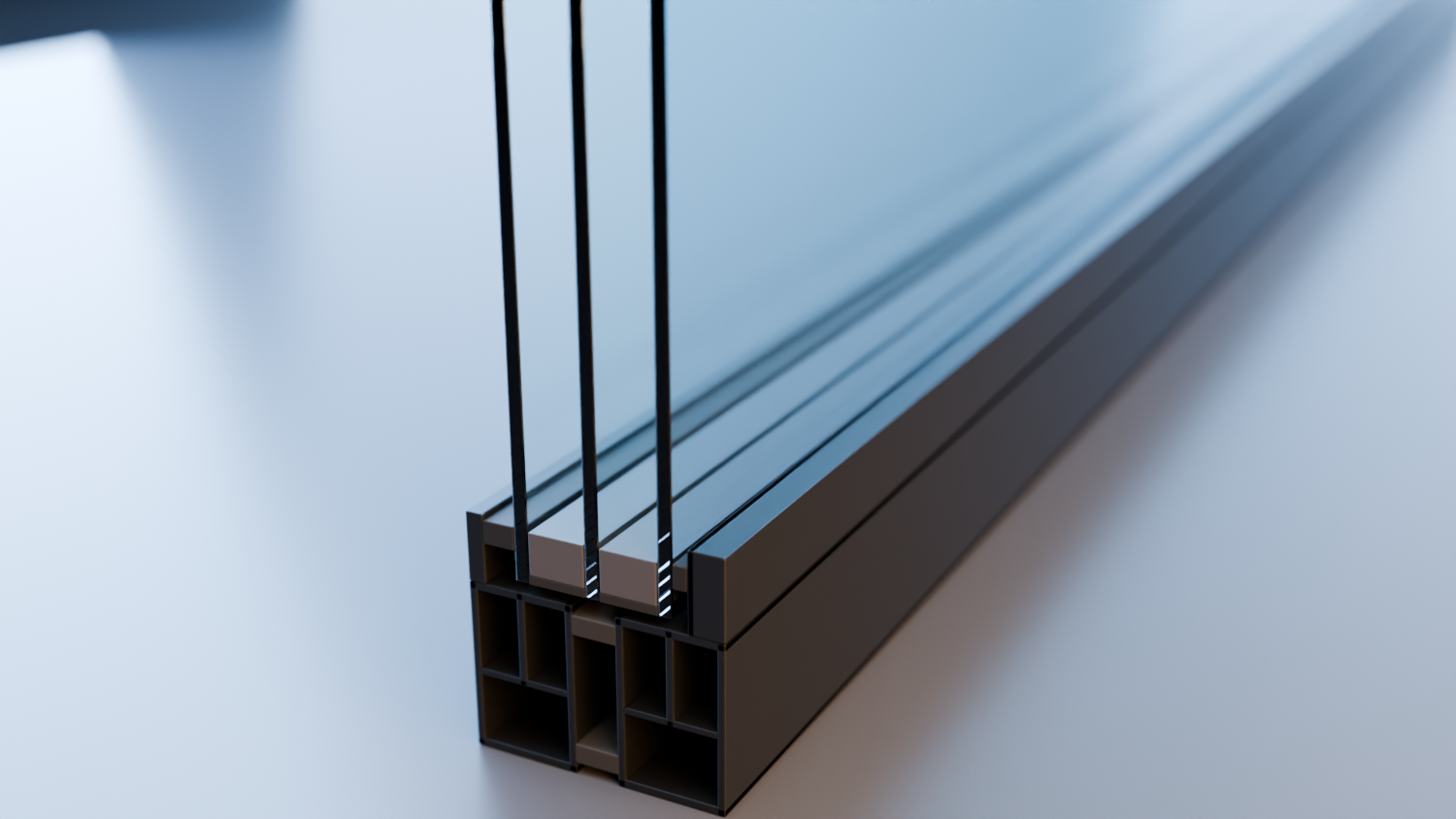
It often helps, for a plain reason: warmer glass. ENERGY STAR says that with certified windows, "the interior glass stays warmer." The US Department of Energy's window guide names the parts that make the difference. These include double or triple panes with inert gases such as argon between them, frame materials designed to insulate better, low-E coatings, and spacers "that keep a window's glass panes the correct distance apart to reduce heat flow and help prevent condensation." For more on those last two, see spacers and window energy efficiency and low-E glass.
Installation counts too. NFRC, which certifies the ratings, says it does not "install or guarantee the performance of improperly installed NFRC-certified windows, doors, and products." A well-rated window still needs a sound installation to perform the way its label says.
It does not fix humidity. If indoor humidity stays high, ENERGY STAR's caveat applies: even certified windows can get condensation in cold weather. Our suggestion is to bring humidity into EPA's range first. A window that still runs wet once the humidity is down is probably a better candidate for replacement than one that only fogs on laundry day.
How to compare windows
- Check your indoor humidity and deal with the moisture sources above.
- Ask each supplier for the NFRC label of the exact product and glass package, including the CR rating if it has one.
- Compare U-factor too. NFRC says it "measures how well a product keeps heat from escaping a room," and that "the lower the number, the better it is at keeping heat in."
- Confirm the ratings in the NFRC Certified Products Directory.
- See what a different glass package does to heating energy at your address. The GlassBase window energy calculator estimates heating and cooling energy in kWh for your ZIP code and wall direction. Its values are engineering estimates, not NFRC ratings; see how the simulator works.
To find window companies near you, browse window companies by city, or Minneapolis and Chicago for cold-climate examples. Terms are defined in the glossary.
Compare glazing options for your ZIP code
Sources
- US EPA, A Brief Guide to Mold, Moisture and Your Home (humidity below 60 percent, ideally 30 to 50 percent; condensation as a sign of high humidity; steps to reduce humidity and prevent condensation; page modified February 18, 2026)
- US EPA, ENERGY STAR, Residential Windows, Doors and Skylights (condensation; cold inside surface; interior glass stays warmer)
- US EPA, ENERGY STAR, Residential Windows, Doors, and Skylights Version 7.0 (criteria: U-factor, SHGC, air leakage)
- NFRC Consumer Guide to Windows, Window Ratings (condensation resistance: optional, 1 to 100, label position, buyer's tip)
- NFRC, What does the NFRC label tell you? (U-factor and condensation resistance), About NFRC (what NFRC does not do) and Certified Products Directory
- US DOE, Guide to Energy-Efficient Windows (panes and gas fills, frames, spacers, low-E)



Get our latest articles!
New and better



Subscribe to updates
Get the latest guides and industry news delivered to your inbox.