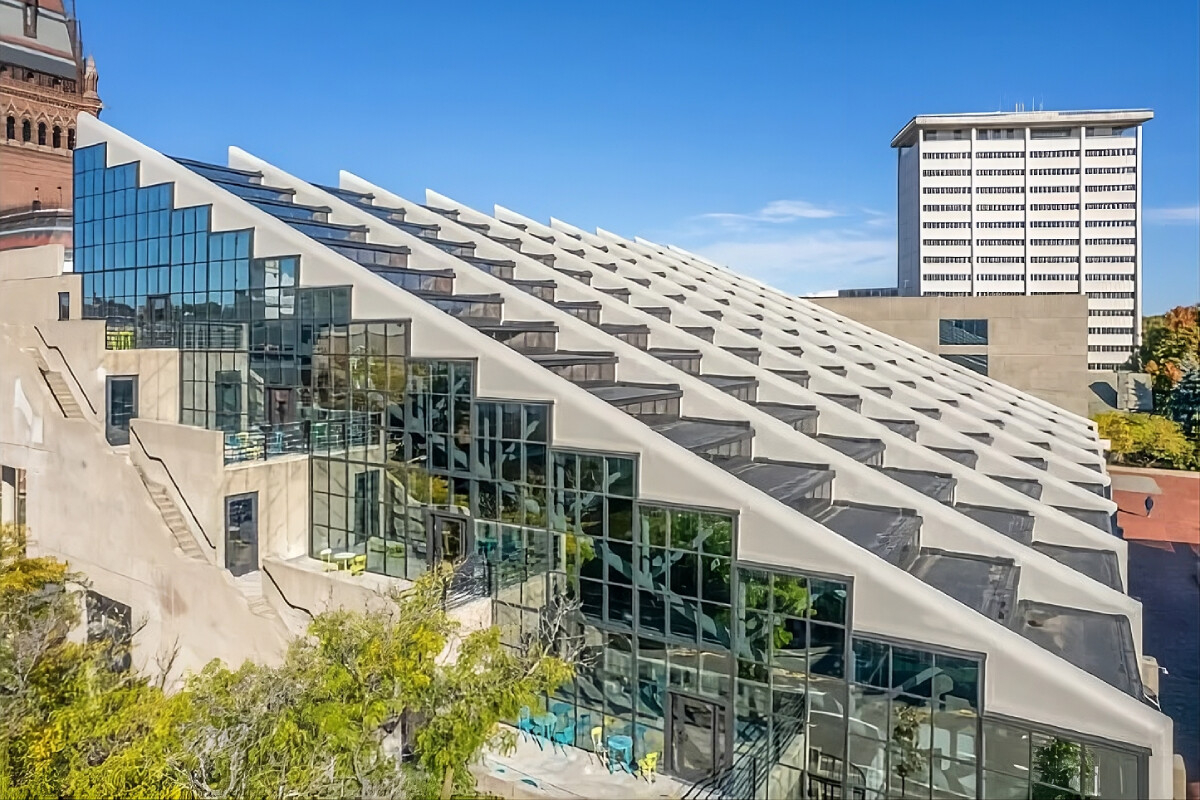
Harvard's Gund Hall Renovation Leans on Vacuum Insulating Glass
The design team tailored glazing performance to each façade, optimizing daylight, solar heat gain control, and thermal efficiency according to building orientation
Photo: Tom Kessler
Harvard's Gund Hall Renovation Leans on Vacuum Insulating Glass

Vitro Architectural Glass announced that its vacuum insulating glass (VIG) and solar control low-E coatings played a central role in the enclosure renewal of Gund Hall, the concrete modernist building that has housed Harvard University's Graduate School of Design since 1972. The project illustrates how advanced glazing can meet stringent state energy codes on a historic building without altering its original profile, a challenge facing architects across the Northeast as codes tighten.
Bruner / Cott Architects led the renovation, working with lighting designer Lam Partners and structural engineer Simpson Gumpertz & Heger. Vitro Architectural Glass, Oldcastle BuildingEnvelope, A&A Window Products and Shawmut Design & Construction rounded out the project team. Gund Hall is known for its stepped terraces, expansive curtain walls and clerestory glazing, but the building had long suffered from air and water infiltration, glare and weak thermal performance.
Massachusetts stretch code requires a 0.25 U-value for the façade. U-value measures how much heat passes through a window assembly; lower numbers indicate better insulation. The project team found that conventional triple-pane IGUs thick enough to meet that target would have visibly changed the building's appearance. Instead, the team specified a hybrid VIG assembly on the north and south elevations using Vitro's VacuMax product line.
VIG uses a vacuum-sealed cavity between glass lites rather than a gas-filled airspace, allowing for a much thinner overall unit than conventional double-pane or triple-pane IGUs while still delivering strong insulating performance. According to the architect, a standard IGU typically achieves a U-value of about 0.24. The hybrid VIG assembly used at Gund Hall reached 0.06 at the center of glass and 0.19 as an overall system U-value, roughly four times the thermal performance of conventional double glazing within close to the thickness of a typical double-pane IGU.
The design team set different glazing specifications for each elevation rather than using a single glass type across the building. George Gard, associate architect at Bruner/Cott Architects, said meeting those specifications required dozens of glazing samples that Vitro supplied to support the selections.
On the south elevation, the team combined Solarban R100 glass and Solargray glass lites with Acuity low-iron glass, warm-edge spacers and argon fill to reinterpret the building's original reflective look while achieving an interior solar heat gain coefficient (SHGC) of 0.21. SHGC measures the fraction of solar radiation that passes through a window as heat; lower values reduce cooling loads.
For the north and east curtain walls and clerestory trays, the team specified Solarban 90 Acuity glass. Gard said the goal was to capture the clarity of the original 1972 plate glass without the cool blue tint that low-iron glass can introduce on its own, noting that Solarban 90 provides a neutral, nonreflective low-E coating that cuts solar heat gain while maintaining clarity and color rendering. The north and east curtain walls block 79% to 80% of incoming solar heat while transmitting 48% of visible light; the clerestory blocks 84% of heat while transmitting 31% of visible light.
The custom glazing system, developed with the architect, Oldcastle BuildingEnvelope and Vitro, also reduced sightlines from 2½ inches to 2 inches. Gard described the assembly as pairing the center-of-glass performance of the VIG's narrow vacuum cavity with the edge-of-glass performance of a narrow warm-edge spacer, exceeding triple-glazing performance within roughly the thickness of a standard double-pane IGU.
The project replaced 1,617 original glazing units, covering a newly glazed area of 15,475 square feet. Vitro projects the glazing upgrades will cut Gund Hall's energy use intensity by 22.2% and utility costs by 19.1%. Gard said the project introduced daylight autonomy throughout the outer rooftop trays for the first time in at least 40 years, calling the improved daylighting the most immediately noticeable change for occupants entering the studio.
The Gund Hall project reflects broader pressure on commercial glazing specifiers as states adopt stricter energy codes modeled on or exceeding ASHRAE and IECC baselines. Massachusetts' stretch code is among the most demanding in the country, and projects involving historic or architecturally significant buildings often face added constraints because thicker triple-pane assemblies can compromise original sightlines and façade proportions. VIG technology, along with advances in low-E coatings and SHGC tuning by orientation, gives architects and glazing contractors more flexibility to hit aggressive U-value targets in retrofit and adaptive reuse projects without resorting to bulkier glazing systems. As more jurisdictions move toward stretch-code-style requirements, demand for similar high-performance, low-profile glazing solutions in both commercial and institutional retrofit markets is likely to grow.
Bruner / Cott Architects led the renovation, working with lighting designer Lam Partners and structural engineer Simpson Gumpertz & Heger. Vitro Architectural Glass, Oldcastle BuildingEnvelope, A&A Window Products and Shawmut Design & Construction rounded out the project team. Gund Hall is known for its stepped terraces, expansive curtain walls and clerestory glazing, but the building had long suffered from air and water infiltration, glare and weak thermal performance.
Massachusetts stretch code requires a 0.25 U-value for the façade. U-value measures how much heat passes through a window assembly; lower numbers indicate better insulation. The project team found that conventional triple-pane IGUs thick enough to meet that target would have visibly changed the building's appearance. Instead, the team specified a hybrid VIG assembly on the north and south elevations using Vitro's VacuMax product line.
VIG uses a vacuum-sealed cavity between glass lites rather than a gas-filled airspace, allowing for a much thinner overall unit than conventional double-pane or triple-pane IGUs while still delivering strong insulating performance. According to the architect, a standard IGU typically achieves a U-value of about 0.24. The hybrid VIG assembly used at Gund Hall reached 0.06 at the center of glass and 0.19 as an overall system U-value, roughly four times the thermal performance of conventional double glazing within close to the thickness of a typical double-pane IGU.
The design team set different glazing specifications for each elevation rather than using a single glass type across the building. George Gard, associate architect at Bruner/Cott Architects, said meeting those specifications required dozens of glazing samples that Vitro supplied to support the selections.
On the south elevation, the team combined Solarban R100 glass and Solargray glass lites with Acuity low-iron glass, warm-edge spacers and argon fill to reinterpret the building's original reflective look while achieving an interior solar heat gain coefficient (SHGC) of 0.21. SHGC measures the fraction of solar radiation that passes through a window as heat; lower values reduce cooling loads.
For the north and east curtain walls and clerestory trays, the team specified Solarban 90 Acuity glass. Gard said the goal was to capture the clarity of the original 1972 plate glass without the cool blue tint that low-iron glass can introduce on its own, noting that Solarban 90 provides a neutral, nonreflective low-E coating that cuts solar heat gain while maintaining clarity and color rendering. The north and east curtain walls block 79% to 80% of incoming solar heat while transmitting 48% of visible light; the clerestory blocks 84% of heat while transmitting 31% of visible light.
The custom glazing system, developed with the architect, Oldcastle BuildingEnvelope and Vitro, also reduced sightlines from 2½ inches to 2 inches. Gard described the assembly as pairing the center-of-glass performance of the VIG's narrow vacuum cavity with the edge-of-glass performance of a narrow warm-edge spacer, exceeding triple-glazing performance within roughly the thickness of a standard double-pane IGU.
The project replaced 1,617 original glazing units, covering a newly glazed area of 15,475 square feet. Vitro projects the glazing upgrades will cut Gund Hall's energy use intensity by 22.2% and utility costs by 19.1%. Gard said the project introduced daylight autonomy throughout the outer rooftop trays for the first time in at least 40 years, calling the improved daylighting the most immediately noticeable change for occupants entering the studio.
The Gund Hall project reflects broader pressure on commercial glazing specifiers as states adopt stricter energy codes modeled on or exceeding ASHRAE and IECC baselines. Massachusetts' stretch code is among the most demanding in the country, and projects involving historic or architecturally significant buildings often face added constraints because thicker triple-pane assemblies can compromise original sightlines and façade proportions. VIG technology, along with advances in low-E coatings and SHGC tuning by orientation, gives architects and glazing contractors more flexibility to hit aggressive U-value targets in retrofit and adaptive reuse projects without resorting to bulkier glazing systems. As more jurisdictions move toward stretch-code-style requirements, demand for similar high-performance, low-profile glazing solutions in both commercial and institutional retrofit markets is likely to grow.
Related news

Industry media
URBAN Showcased New Corner Break Tester at GlassBuild America in Las Vegas
Oct 12, 2026
Industry media
ISO 9001:2026 Takes Effect as Window and Door Manufacturers Face New Certification Requirements
Oct 09, 2026
Industry media
VEKA North America Showcases Aperture Vinyl Window System with Ultra-Slim Sightlines at GlassBuild 2026
Oct 08, 2026
Industry media
Kömmerling Showcases German-Engineered Window and Door Systems at GlassBuild America 2026
Oct 07, 2026Get our latest news!
Latest & Best

Industry media
Urban Machinery adds safety package to AKS 1150-SP single point welder ahead of GlassBuild America
Oct 06, 2026
Trending News
Industry media
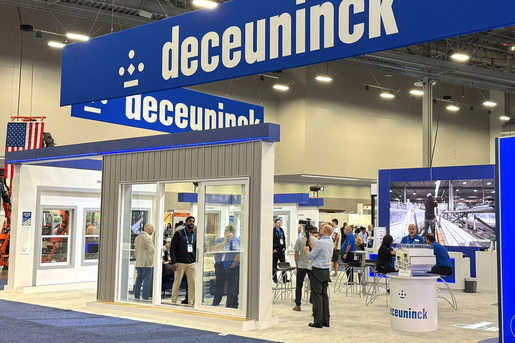
Deceuninck Cuts Patio Door Part Count Nearly in Half With New 205 System
Sep 29, 2026
Industry media
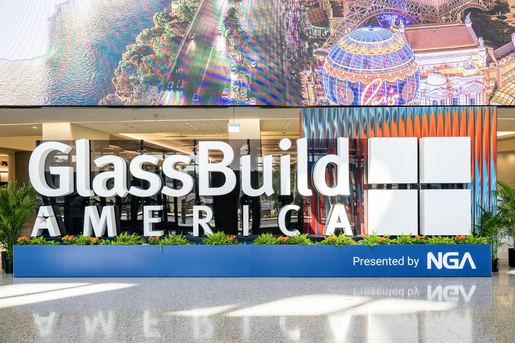
GlassBuild America 2026 Opens in Las Vegas With Focus on Industry Decision-Making
Sep 23, 2026
Industry media
High-Transparency Glazing Drives Design of LEED Gold Engineering Building at UT Dallas
Aug 20, 2026Subscribe to updates
Get the latest guides and industry news delivered to your inbox.