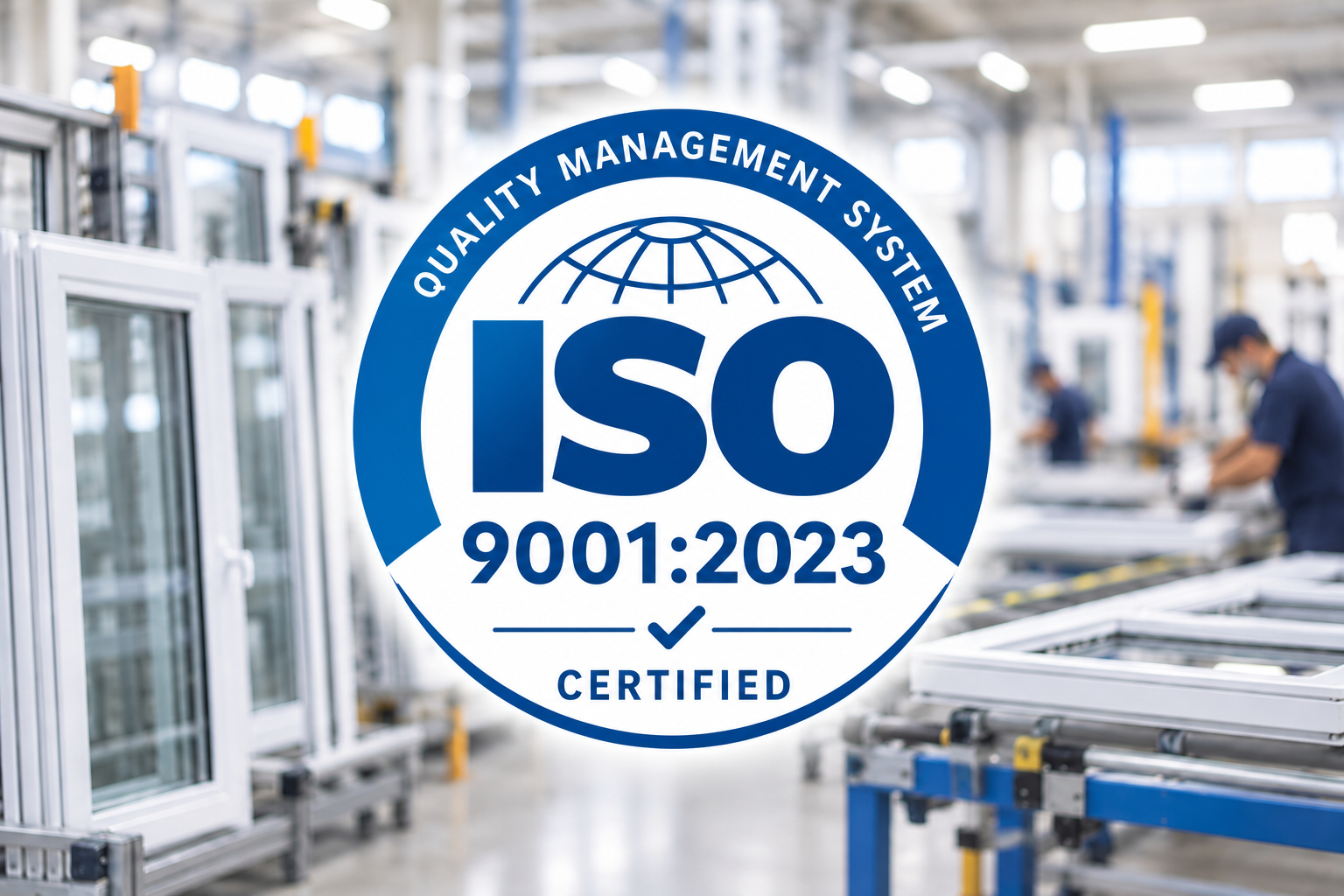
ISO 9001:2026 Takes Effect as Window and Door Manufacturers Face New Certification Requirements
ISO 9001:2026 introduces updated quality management requirements, with a three-year transition period for existing certificate holders
Photo: AI-generated by GlassBase
ISO 9001:2026 Takes Effect as Window and Door Manufacturers Face New Certification Requirements

ISO 9001:2026 officially replaced ISO 9001:2015 on September 16, 2026, according to ISO Certifications Group (ICG), a U.S.-based certification body. The revised international quality management standard introduces updated requirements for organizations seeking certification and establishes a transition process for existing certificate holders. For U.S. window, door, and insulating glass manufacturers, the change creates a new compliance timeline and an opportunity to review quality management procedures.
The International Organization for Standardization (ISO) published the new edition after more than a decade under the 2015 standard. ISO 9001 sets requirements for quality management systems (QMS), which organizations use to control processes, maintain product consistency, address customer requirements, and support continual improvement.
The 2026 revision retains the standard's established framework but clarifies several requirements. ISO places greater emphasis on leadership responsibilities, organizational quality culture, ethical behavior, and the management of risks and opportunities. It also introduces a new Annex A to explain key terms and requirements.
For companies that already hold ISO 9001:2015 certification, the updated standard does not require an entirely new certification process. Existing certificate holders have until September 30, 2029, to complete the transition to ISO 9001:2026.
Organizations can generally combine the transition assessment with a scheduled surveillance or recertification audit.
ICG reports that organizations seeking certification to the new edition must undergo an independent assessment of their quality management systems. During the audit, the certification body reviews whether the organization's documented procedures and actual operations meet the standard's requirements.
The release also gives existing certificate holders an opportunity to reconsider their certification providers. Companies may transfer their ISO 9001 certification to another qualified certification body if they meet the applicable transfer requirements.
For window and door manufacturers, ISO 9001 certification can support quality controls across purchasing, production, inspection, and customer service. These processes affect manufacturers of vinyl, aluminum, fiberglass, and wood products, as well as suppliers of insulating glass units (IGUs), hardware, and other components.
The revised standard may prompt manufacturers to review how they document production controls, evaluate suppliers, handle nonconforming products, and investigate customer complaints. Companies may also need to examine how management identifies operational risks and assigns responsibility for quality performance.
ISO 9001 certification addresses an organization's quality management system rather than the performance of an individual window, door, or glazing product. It does not replace product testing, certification, or code compliance requirements that apply in the U.S. market.
For manufacturers that supply commercial construction projects or work with customers that require ISO 9001 certification, maintaining a valid certificate may remain an important supplier qualification.
The International Organization for Standardization (ISO) published the new edition after more than a decade under the 2015 standard. ISO 9001 sets requirements for quality management systems (QMS), which organizations use to control processes, maintain product consistency, address customer requirements, and support continual improvement.
The 2026 revision retains the standard's established framework but clarifies several requirements. ISO places greater emphasis on leadership responsibilities, organizational quality culture, ethical behavior, and the management of risks and opportunities. It also introduces a new Annex A to explain key terms and requirements.
For companies that already hold ISO 9001:2015 certification, the updated standard does not require an entirely new certification process. Existing certificate holders have until September 30, 2029, to complete the transition to ISO 9001:2026.
Organizations can generally combine the transition assessment with a scheduled surveillance or recertification audit.
ICG reports that organizations seeking certification to the new edition must undergo an independent assessment of their quality management systems. During the audit, the certification body reviews whether the organization's documented procedures and actual operations meet the standard's requirements.
The release also gives existing certificate holders an opportunity to reconsider their certification providers. Companies may transfer their ISO 9001 certification to another qualified certification body if they meet the applicable transfer requirements.
For window and door manufacturers, ISO 9001 certification can support quality controls across purchasing, production, inspection, and customer service. These processes affect manufacturers of vinyl, aluminum, fiberglass, and wood products, as well as suppliers of insulating glass units (IGUs), hardware, and other components.
The revised standard may prompt manufacturers to review how they document production controls, evaluate suppliers, handle nonconforming products, and investigate customer complaints. Companies may also need to examine how management identifies operational risks and assigns responsibility for quality performance.
ISO 9001 certification addresses an organization's quality management system rather than the performance of an individual window, door, or glazing product. It does not replace product testing, certification, or code compliance requirements that apply in the U.S. market.
For manufacturers that supply commercial construction projects or work with customers that require ISO 9001 certification, maintaining a valid certificate may remain an important supplier qualification.
Companies in this article
Related news
Industry media
URBAN Showcased New Corner Break Tester at GlassBuild America in Las Vegas
Oct 12, 2026
Industry media
VEKA North America Showcases Aperture Vinyl Window System with Ultra-Slim Sightlines at GlassBuild 2026
Oct 08, 2026
Industry media
Kömmerling Showcases German-Engineered Window and Door Systems at GlassBuild America 2026
Oct 07, 2026
Industry media
Urban Machinery adds safety package to AKS 1150-SP single point welder ahead of GlassBuild America
Oct 06, 2026Get our latest news!
Latest & Best
Industry media
Deceuninck Cuts Patio Door Part Count Nearly in Half With New 205 System
Sep 29, 2026Trending News

Industry media
GlassBuild America 2026 Opens in Las Vegas With Focus on Industry Decision-Making
Sep 23, 2026
Industry media
High-Transparency Glazing Drives Design of LEED Gold Engineering Building at UT Dallas
Aug 20, 2026
Subscribe to updates
Get the latest guides and industry news delivered to your inbox.