Aging Homes Are Driving a Remodeling Boom — and Window Makers Stand to Gain
Source: Harvard Joint Center for Housing Studies, The State of the Nation's Housing 2026
Aging Homes Are Driving a Remodeling Boom — and Window Makers Stand to Gain

The remodeling market is expanding at a pace that now rivals new home construction, according to the Harvard Joint Center for Housing Studies' annual *State of the Nation's Housing 2026* report. For window and door manufacturers, the shift signals a structural change in where demand is coming from — and it points squarely at the replacement and retrofit market.
Owner improvement spending reached $376 billion in 2025, nearly matching the $419 billion spent on new single-family construction. A decade ago, remodeling represented 34 percent of total construction spending. By 2025, that share had climbed to 41 percent. The report attributes the rise directly to the aging condition of the American housing stock.
The median age of an owner-occupied home in the United States is now 42 years, up from 33 years in 2010. Rental units are even older, with a median age of 43 years. Homes of that vintage were built before modern fenestration standards became widespread. Many still carry single-pane glazing or early-generation double-pane insulating glass units that no longer meet current thermal performance expectations.
Owners of older homes spend significantly more on upkeep. According to the report, households in homes built before 1940 spend an average of $6,700 per year on improvements and repairs — roughly 50 percent more than owners of homes built in 2010 or later. As the housing stock ages further, that spending gap will widen.
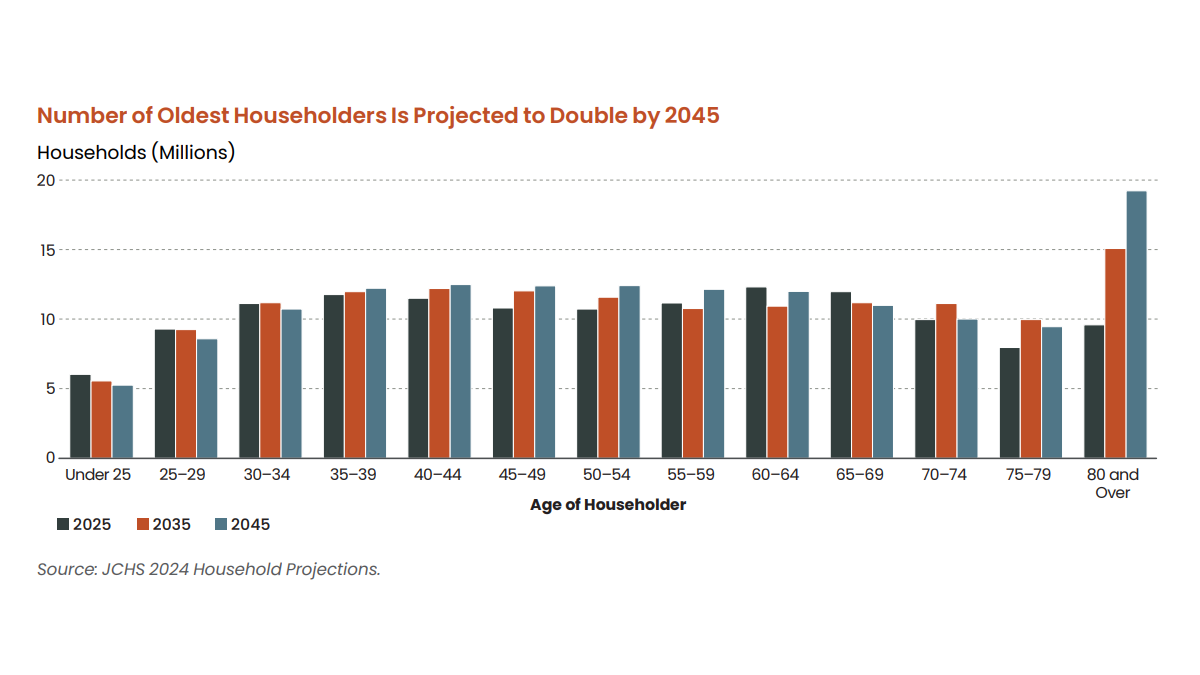
The demographic picture reinforces the trend. The number of Americans aged 65 and older grew from 48 million to 65 million between 2015 and 2025, now representing 19 percent of the total population. The report projects that the population of householders aged 80 and over will double, from 9.6 million today to 19.2 million by 2045. More than half of professional remodelers reported involvement in aging-in-place home modifications in 2024.
For the window and door industry, aging-in-place work translates into specific product demand. Wider door openings, low-threshold entries, lever-style hardware, and casement or awning windows — which open and close more easily than double-hung units — see stronger specification in this segment. Fiberglass windows and doors, which offer better long-term dimensional stability than vinyl in high-use applications, are frequently specified for accessibility-driven remodels.
The energy picture adds another layer of urgency for homeowners considering window and door replacement. Residential electricity costs rose more than 30 percent between 2020 and 2025, and the report found that 43.6 million households experienced energy insecurity in 2024. Older fenestration — particularly single-pane and early double-pane IGUs without low-E coatings — contributes directly to higher utility bills. Upgrading to a modern double-pane or triple-pane IGU with low-E glass can meaningfully reduce heat transfer and lower energy costs, a selling point that carries increasing weight with cost-pressured homeowners.
Federal incentive programs that previously supported energy-efficiency retrofits have weakened. The 2025 federal budget reconciliation law ended several Inflation Reduction Act tax credits ahead of schedule. Some state and local programs continue to fund electrification and retrofit work, but the national subsidy landscape has thinned. Window and door dealers and distributors operating in states with active retrofit programs will find better near-term conditions than those in markets where federal pullback has not been offset locally.
The broader construction picture explains why replacement demand matters so much right now. New single-family housing starts fell 7 percent in 2025 to 940,600 units. Multifamily completions dropped 20 percent. New construction has been the traditional volume driver for fenestration manufacturers, and that channel is contracting.
The remodeling market does not fully replace lost new-construction volume, but it is moving in the opposite direction at a time when builders are pulling back. For window and door suppliers willing to invest in distribution channels, installer networks, and product lines suited to retrofit applications, the aging American housing stock represents a durable source of demand that is not tied to the new-home cycle.
Owner improvement spending reached $376 billion in 2025, nearly matching the $419 billion spent on new single-family construction. A decade ago, remodeling represented 34 percent of total construction spending. By 2025, that share had climbed to 41 percent. The report attributes the rise directly to the aging condition of the American housing stock.
The median age of an owner-occupied home in the United States is now 42 years, up from 33 years in 2010. Rental units are even older, with a median age of 43 years. Homes of that vintage were built before modern fenestration standards became widespread. Many still carry single-pane glazing or early-generation double-pane insulating glass units that no longer meet current thermal performance expectations.
Owners of older homes spend significantly more on upkeep. According to the report, households in homes built before 1940 spend an average of $6,700 per year on improvements and repairs — roughly 50 percent more than owners of homes built in 2010 or later. As the housing stock ages further, that spending gap will widen.
The demographic picture reinforces the trend. The number of Americans aged 65 and older grew from 48 million to 65 million between 2015 and 2025, now representing 19 percent of the total population. The report projects that the population of householders aged 80 and over will double, from 9.6 million today to 19.2 million by 2045. More than half of professional remodelers reported involvement in aging-in-place home modifications in 2024.
For the window and door industry, aging-in-place work translates into specific product demand. Wider door openings, low-threshold entries, lever-style hardware, and casement or awning windows — which open and close more easily than double-hung units — see stronger specification in this segment. Fiberglass windows and doors, which offer better long-term dimensional stability than vinyl in high-use applications, are frequently specified for accessibility-driven remodels.
The energy picture adds another layer of urgency for homeowners considering window and door replacement. Residential electricity costs rose more than 30 percent between 2020 and 2025, and the report found that 43.6 million households experienced energy insecurity in 2024. Older fenestration — particularly single-pane and early double-pane IGUs without low-E coatings — contributes directly to higher utility bills. Upgrading to a modern double-pane or triple-pane IGU with low-E glass can meaningfully reduce heat transfer and lower energy costs, a selling point that carries increasing weight with cost-pressured homeowners.
Federal incentive programs that previously supported energy-efficiency retrofits have weakened. The 2025 federal budget reconciliation law ended several Inflation Reduction Act tax credits ahead of schedule. Some state and local programs continue to fund electrification and retrofit work, but the national subsidy landscape has thinned. Window and door dealers and distributors operating in states with active retrofit programs will find better near-term conditions than those in markets where federal pullback has not been offset locally.
The broader construction picture explains why replacement demand matters so much right now. New single-family housing starts fell 7 percent in 2025 to 940,600 units. Multifamily completions dropped 20 percent. New construction has been the traditional volume driver for fenestration manufacturers, and that channel is contracting.
The remodeling market does not fully replace lost new-construction volume, but it is moving in the opposite direction at a time when builders are pulling back. For window and door suppliers willing to invest in distribution channels, installer networks, and product lines suited to retrofit applications, the aging American housing stock represents a durable source of demand that is not tied to the new-home cycle.
Related news
Industry media
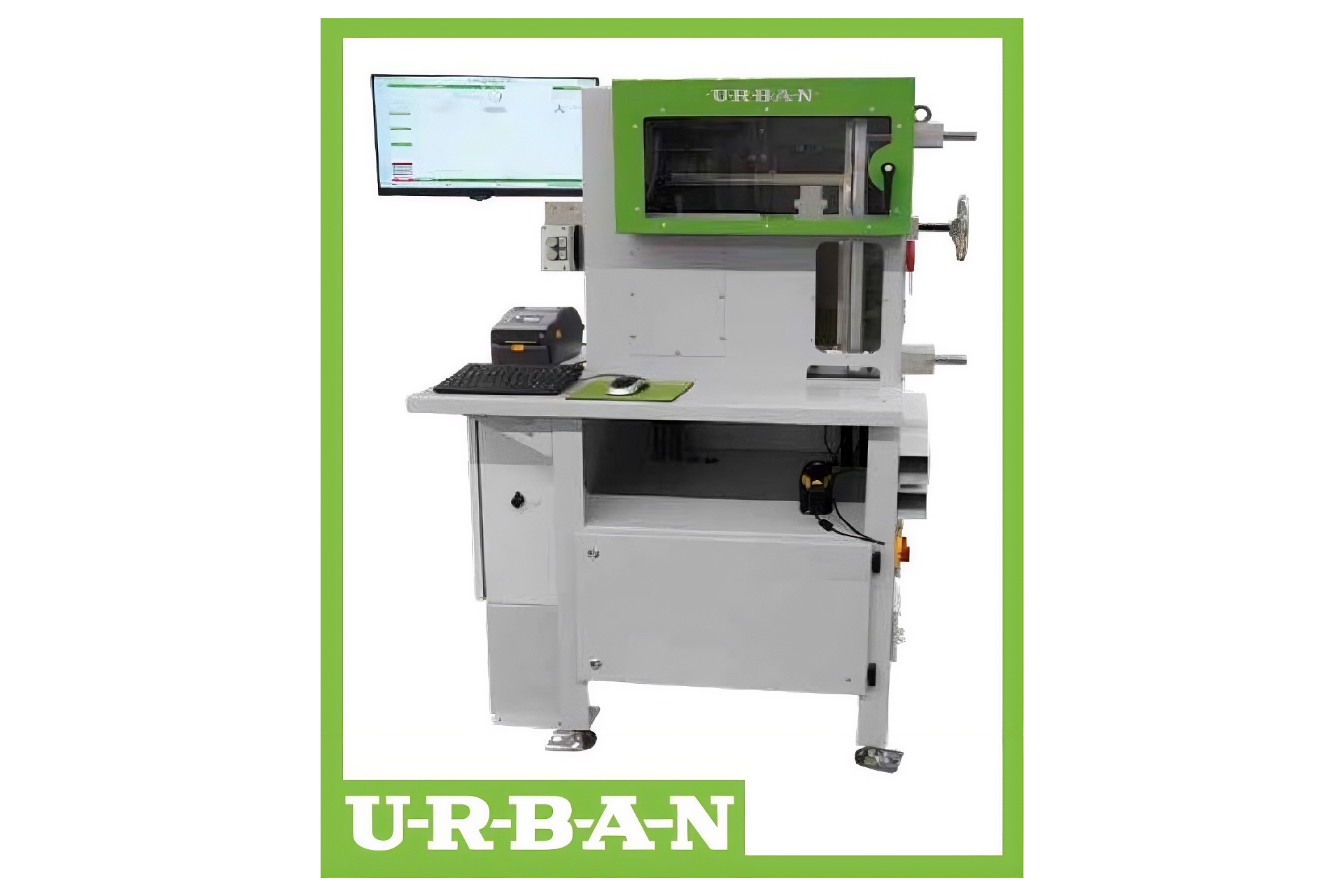
URBAN Showcased New Corner Break Tester at GlassBuild America in Las Vegas
Oct 12, 2026
Industry media
ISO 9001:2026 Takes Effect as Window and Door Manufacturers Face New Certification Requirements
Oct 09, 2026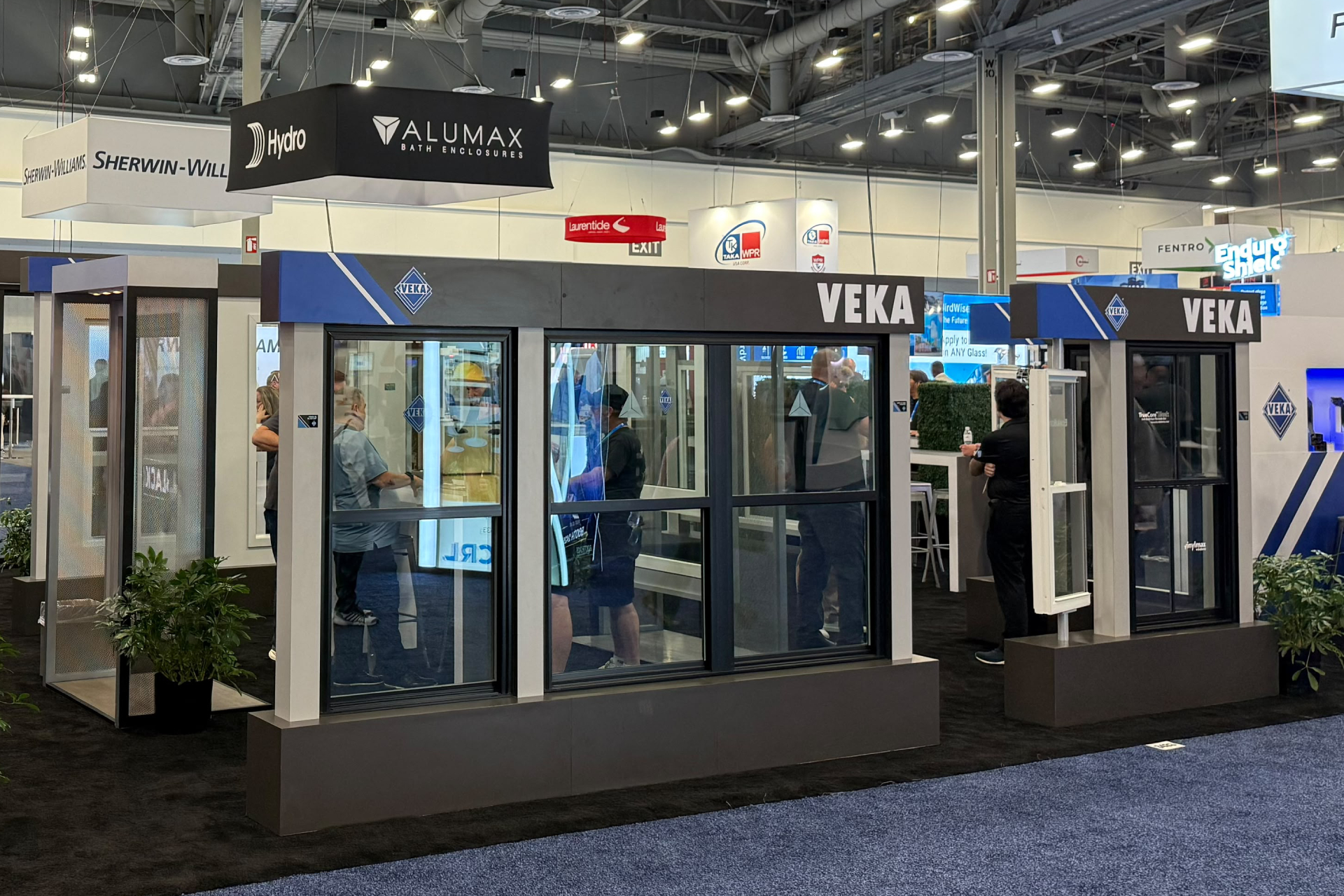
Industry media
VEKA North America Showcases Aperture Vinyl Window System with Ultra-Slim Sightlines at GlassBuild 2026
Oct 08, 2026
Industry media
Kömmerling Showcases German-Engineered Window and Door Systems at GlassBuild America 2026
Oct 07, 2026Get our latest news!
Latest & Best

Industry media
Urban Machinery adds safety package to AKS 1150-SP single point welder ahead of GlassBuild America
Oct 06, 2026

Trending News
Industry media
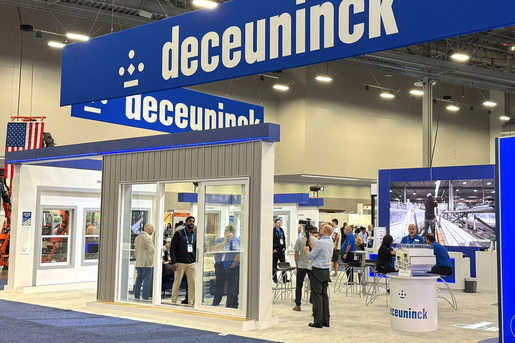
Deceuninck Cuts Patio Door Part Count Nearly in Half With New 205 System
Sep 29, 2026
Industry media
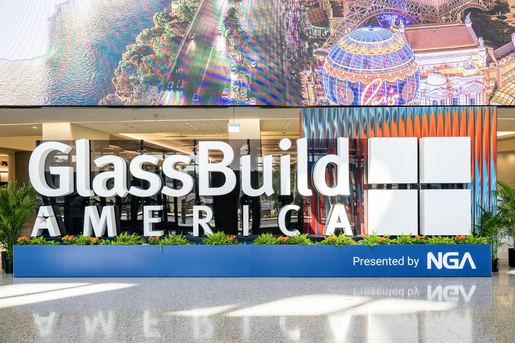
GlassBuild America 2026 Opens in Las Vegas With Focus on Industry Decision-Making
Sep 23, 2026
Industry media
High-Transparency Glazing Drives Design of LEED Gold Engineering Building at UT Dallas
Aug 20, 2026Subscribe to updates
Get the latest guides and industry news delivered to your inbox.