Daylighting Research Points to New Health-Driven Opportunities for Window Industry
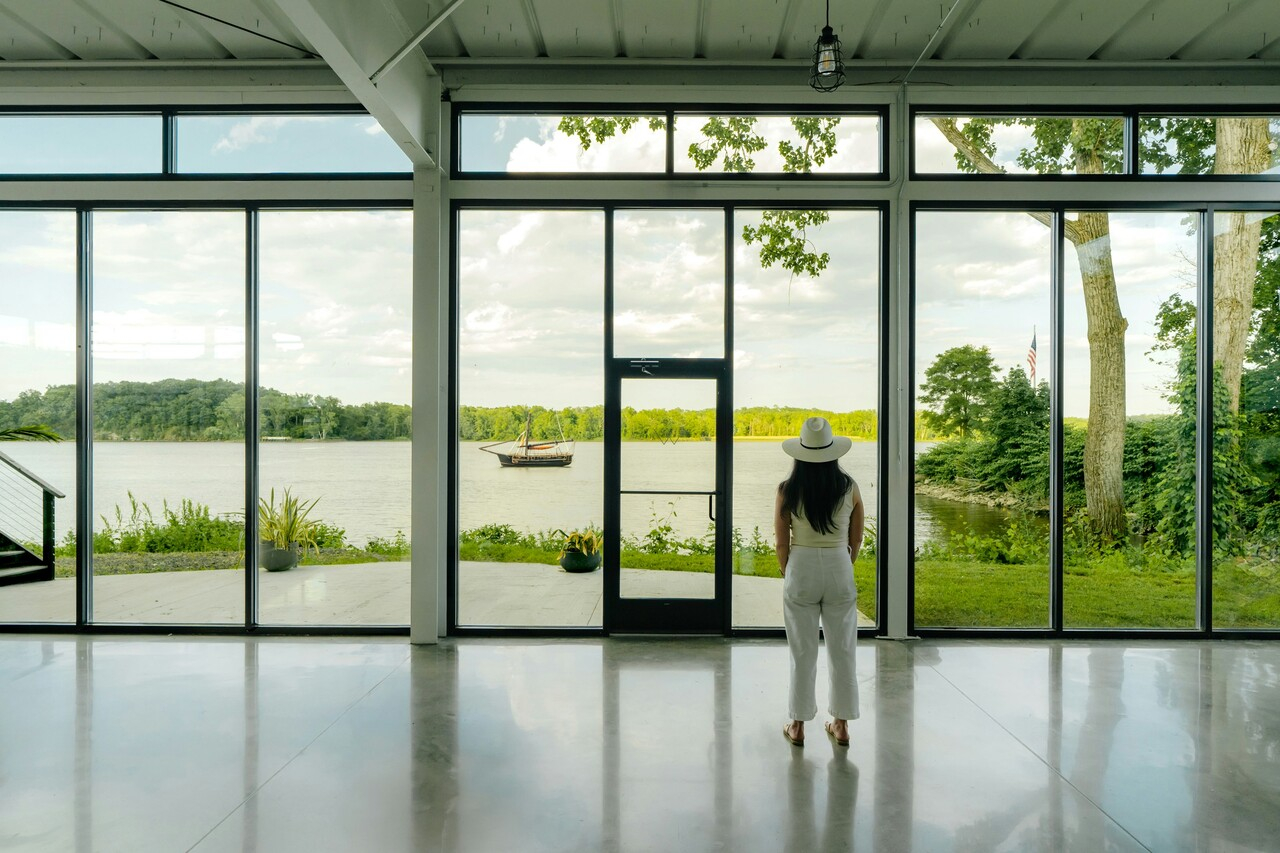
Illustrative photo: Clay Banks / Unsplash
Daylighting Research Points to New Health-Driven Opportunities for Window Industry

A leading daylighting researcher told window and door industry leaders that a growing body of scientific evidence links natural light exposure to measurable human health benefits, opening new opportunities for the fenestration industry. The Fenestration and Glazing Industry Alliance (FGIA) shared the findings during its Virtual Summer Summit, in a session titled "Daylight and Human Health: New Opportunities for the Fenestration Industry."
Fenestration refers to the design and placement of windows, doors, and other openings in a building's exterior. Lisa Heschong of the Heschong Mahone Group, a daylighting research and consulting firm, presented findings from four scientific fields: chronobiology, epidemiology, embryology and microbiology. She argued that this research is converging on a single conclusion: exposure to natural daylight carries substantial health benefits.
Heschong noted that daylight's connection to health is not a new topic. "Even 100 years ago, daylight and health was big news," she said. "It got a huge amount of ink. But now we have vastly more scientific tools." She said researchers across multiple disciplines are independently reaching similar conclusions about daylight's role in human health.
In chronobiology, Heschong pointed to melatonin as a key regulator of the body's internal clock. She said human eyes are especially sensitive to blue wavelengths of light. Exposure to blue light during the day suppresses melatonin production; melatonin levels rise at night as blue light exposure fades, a cycle tied to quality.
Heschong cited an epidemiological study of 88,000 adults in the United Kingdom. Contrary to concerns that greater sunlight exposure raises skin cancer risk, the study found that higher daytime light exposure was linked to lower skin cancer rates and better mental health outcomes. "There were 17 percent fewer deaths among those with the highest daytime light exposure studied," Heschong said. She added that electric lighting cannot replicate the light levels achieved through natural sunlight exposure.
On embryology, Heschong discussed the rise in childhood myopia, or nearsightedness, first documented in the 1970s. She described it as a developmental condition that stabilizes in adulthood but raises the risk of eye disease and blindness later in life. Citing World Health Organization projections, she said myopia could affect 50 percent of the global adult population by 2050. Researchers are now studying light exposure as a potential factor in myopia prevention, she said.
In microbiology, Heschong described early research into how mitochondria, the energy-producing structures within human cells, may respond to light exposure. She referred to this as the "mitochondria hypothesis," suggesting mitochondria may absorb photons in a process that produces additional cellular energy. Heschong characterized the research as preliminary but said credible evidence supports a link between light exposure and metabolic function.
Heschong said indoor daylight exposure remains understudied compared to outdoor exposure. She said public health and energy policy frameworks do not currently account for light's health effects, and that the built environment is not treated as what she called a "modifiable factor" in health outcomes. She also noted that researchers studying these connections often work in isolation from one another, and their work rarely receives funding from traditional sources.
Heschong called on fenestration industry members to educate themselves on daylighting research, build professional networks around the topic, support studies on indoor daylight exposure, and push for building codes that address public health alongside energy efficiency. "There is a lot of opportunity here for the industry," she said.
For manufacturers of insulating glass units (IGUs), as well as producers windows, the research adds a health-focused rationale to ongoing conversations about glazing performance. Products designed to maximize daylight transmission, including low-E glass formulated for visible light transmittance alongside thermal performance, could see increased attention from architects and specifiers if health-based building code provisions advance. Curtain wall systems and other large-glazing applications, already valued for daylighting in commercial construction, may also benefit from a stronger evidence base connecting light exposure to occupant health outcomes.
Fenestration refers to the design and placement of windows, doors, and other openings in a building's exterior. Lisa Heschong of the Heschong Mahone Group, a daylighting research and consulting firm, presented findings from four scientific fields: chronobiology, epidemiology, embryology and microbiology. She argued that this research is converging on a single conclusion: exposure to natural daylight carries substantial health benefits.
Heschong noted that daylight's connection to health is not a new topic. "Even 100 years ago, daylight and health was big news," she said. "It got a huge amount of ink. But now we have vastly more scientific tools." She said researchers across multiple disciplines are independently reaching similar conclusions about daylight's role in human health.
In chronobiology, Heschong pointed to melatonin as a key regulator of the body's internal clock. She said human eyes are especially sensitive to blue wavelengths of light. Exposure to blue light during the day suppresses melatonin production; melatonin levels rise at night as blue light exposure fades, a cycle tied to quality.
Heschong cited an epidemiological study of 88,000 adults in the United Kingdom. Contrary to concerns that greater sunlight exposure raises skin cancer risk, the study found that higher daytime light exposure was linked to lower skin cancer rates and better mental health outcomes. "There were 17 percent fewer deaths among those with the highest daytime light exposure studied," Heschong said. She added that electric lighting cannot replicate the light levels achieved through natural sunlight exposure.
On embryology, Heschong discussed the rise in childhood myopia, or nearsightedness, first documented in the 1970s. She described it as a developmental condition that stabilizes in adulthood but raises the risk of eye disease and blindness later in life. Citing World Health Organization projections, she said myopia could affect 50 percent of the global adult population by 2050. Researchers are now studying light exposure as a potential factor in myopia prevention, she said.
In microbiology, Heschong described early research into how mitochondria, the energy-producing structures within human cells, may respond to light exposure. She referred to this as the "mitochondria hypothesis," suggesting mitochondria may absorb photons in a process that produces additional cellular energy. Heschong characterized the research as preliminary but said credible evidence supports a link between light exposure and metabolic function.
Heschong said indoor daylight exposure remains understudied compared to outdoor exposure. She said public health and energy policy frameworks do not currently account for light's health effects, and that the built environment is not treated as what she called a "modifiable factor" in health outcomes. She also noted that researchers studying these connections often work in isolation from one another, and their work rarely receives funding from traditional sources.
Heschong called on fenestration industry members to educate themselves on daylighting research, build professional networks around the topic, support studies on indoor daylight exposure, and push for building codes that address public health alongside energy efficiency. "There is a lot of opportunity here for the industry," she said.
For manufacturers of insulating glass units (IGUs), as well as producers windows, the research adds a health-focused rationale to ongoing conversations about glazing performance. Products designed to maximize daylight transmission, including low-E glass formulated for visible light transmittance alongside thermal performance, could see increased attention from architects and specifiers if health-based building code provisions advance. Curtain wall systems and other large-glazing applications, already valued for daylighting in commercial construction, may also benefit from a stronger evidence base connecting light exposure to occupant health outcomes.
Related news

Industry media
URBAN Showcased New Corner Break Tester at GlassBuild America in Las Vegas
Oct 12, 2026
Industry media
ISO 9001:2026 Takes Effect as Window and Door Manufacturers Face New Certification Requirements
Oct 09, 2026
Industry media
VEKA North America Showcases Aperture Vinyl Window System with Ultra-Slim Sightlines at GlassBuild 2026
Oct 08, 2026
Industry media
Kömmerling Showcases German-Engineered Window and Door Systems at GlassBuild America 2026
Oct 07, 2026Get our latest news!
Latest & Best
Industry media
Urban Machinery adds safety package to AKS 1150-SP single point welder ahead of GlassBuild America
Oct 06, 2026
Trending News

Industry media
Deceuninck Cuts Patio Door Part Count Nearly in Half With New 205 System
Sep 29, 2026

Industry media
GlassBuild America 2026 Opens in Las Vegas With Focus on Industry Decision-Making
Sep 23, 2026
Industry media
High-Transparency Glazing Drives Design of LEED Gold Engineering Building at UT Dallas
Aug 20, 2026Subscribe to updates
Get the latest guides and industry news delivered to your inbox.